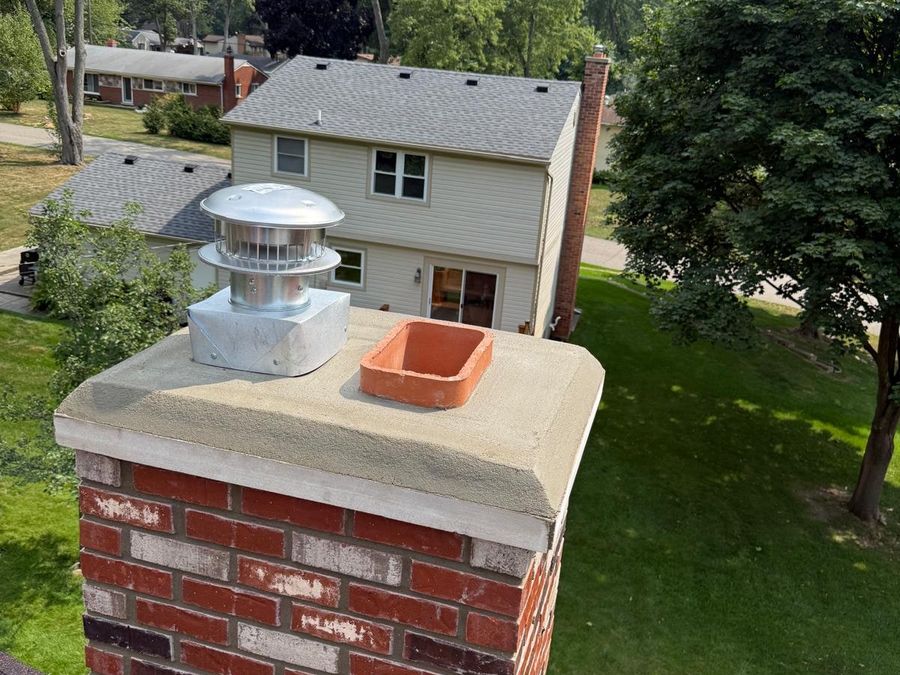
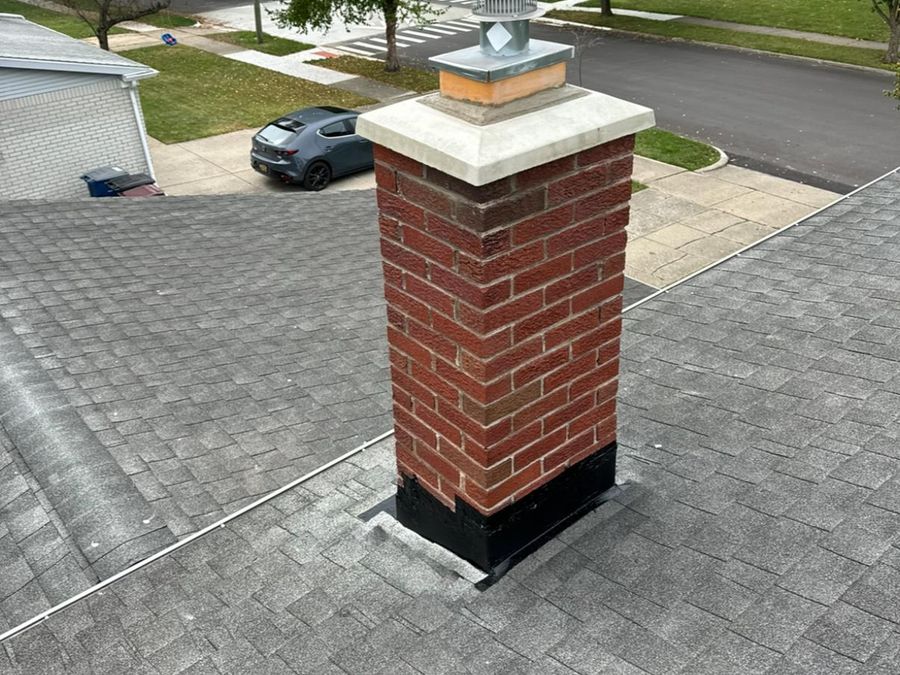
Beautiful Chimney Restoration Built to Last for Years.
A chimney is one of the first things people see on a roofline. When it's stained, patched or crumbling, the whole house looks older than it is.
What restoration covers
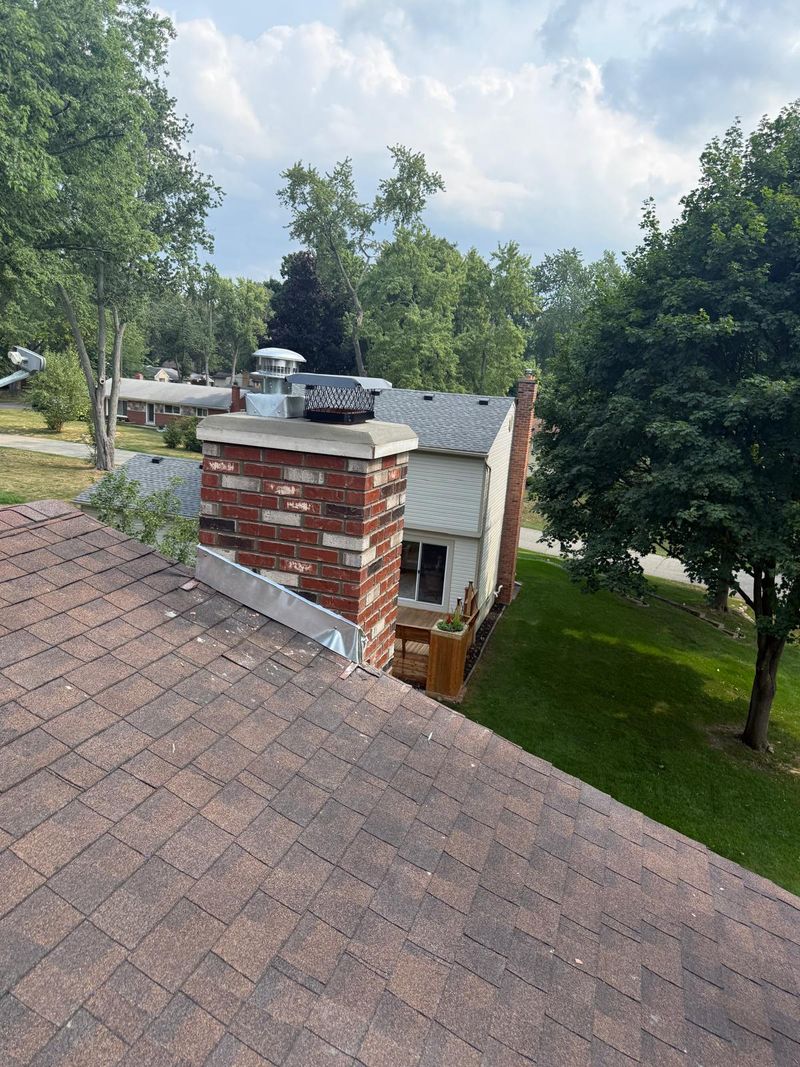
- Masonry repair and tuckpointing, with brick and mortar matched to the house
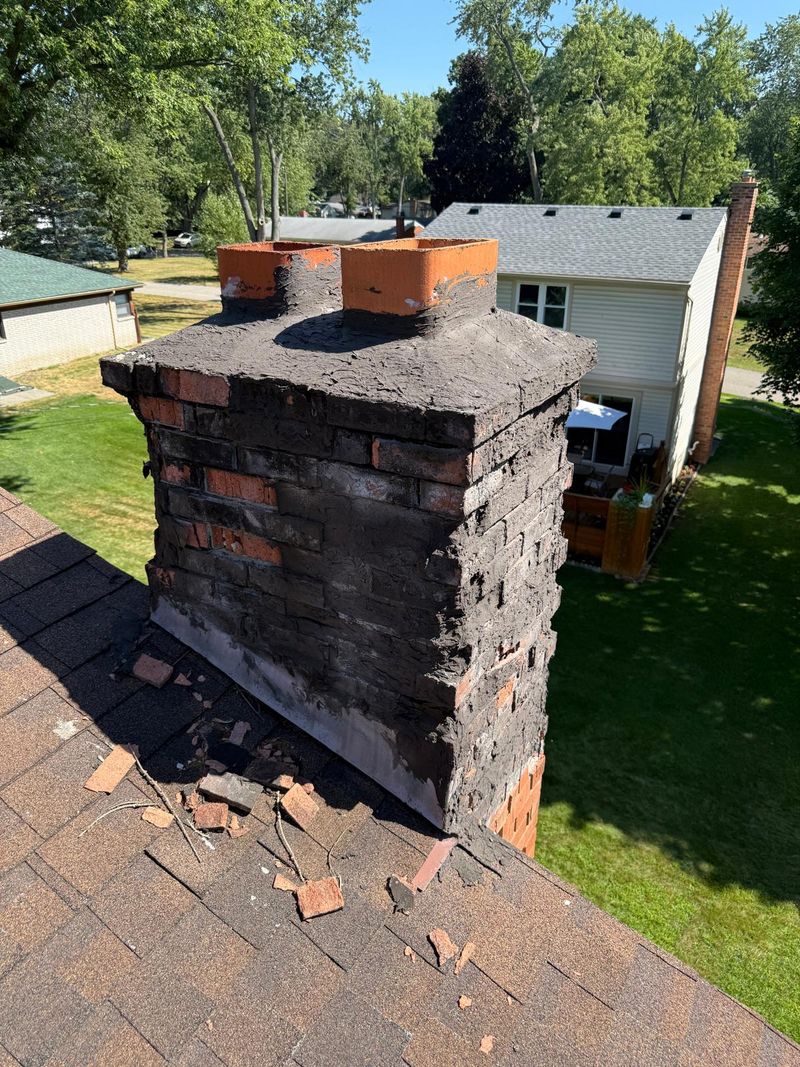
- Removing staining and old coatings
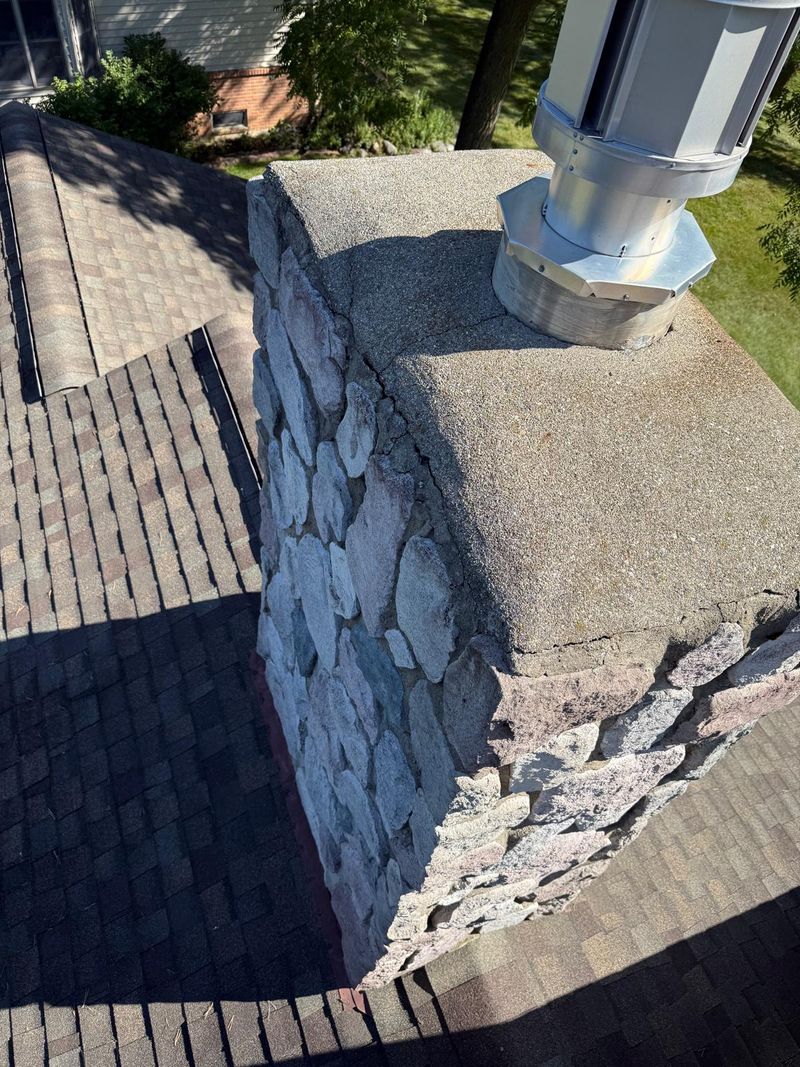
- Crown repair or rebuilding
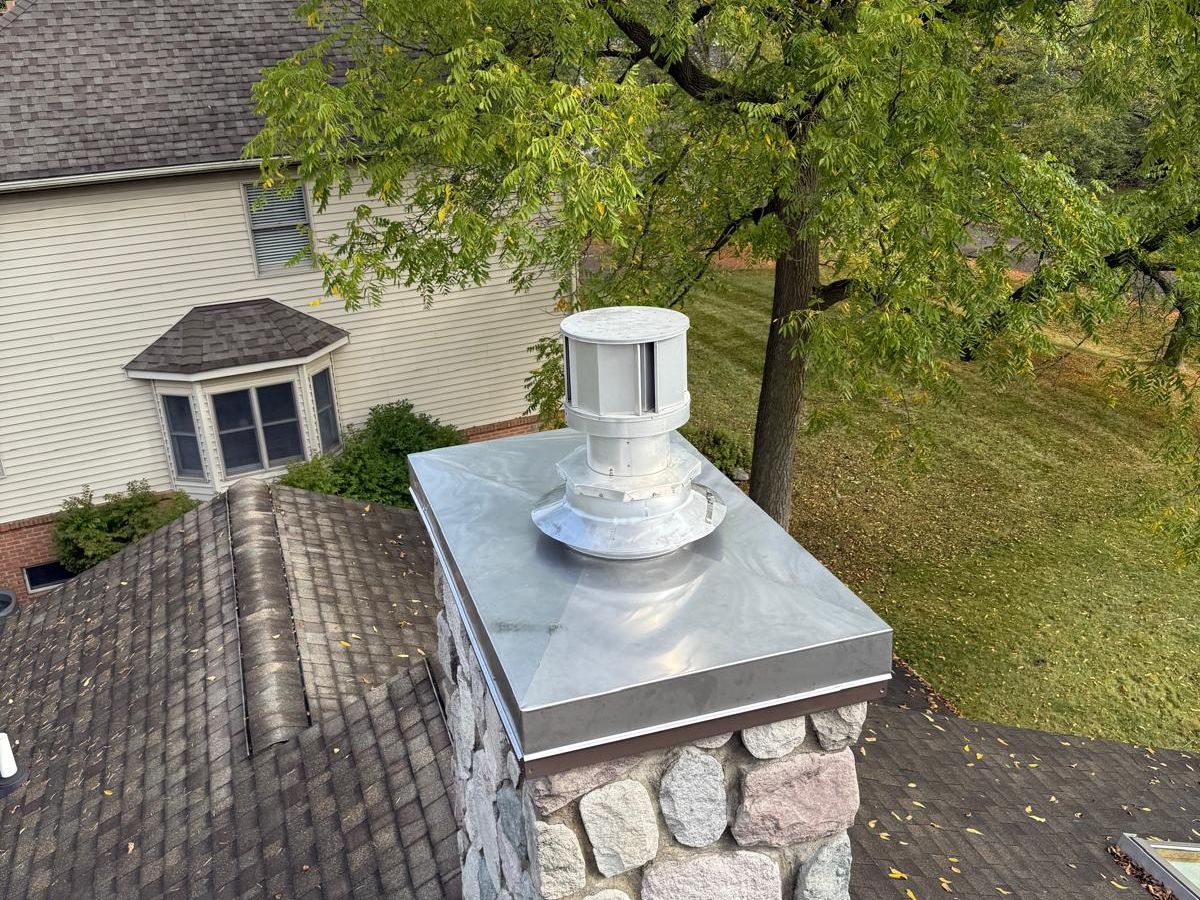
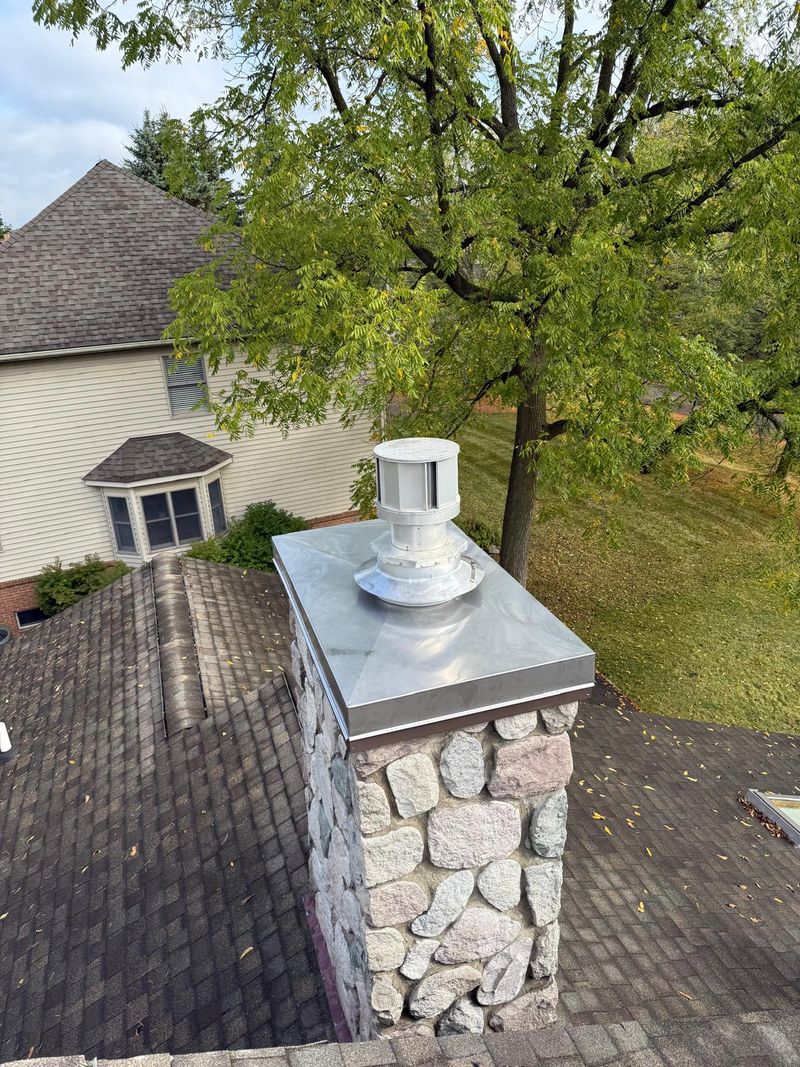
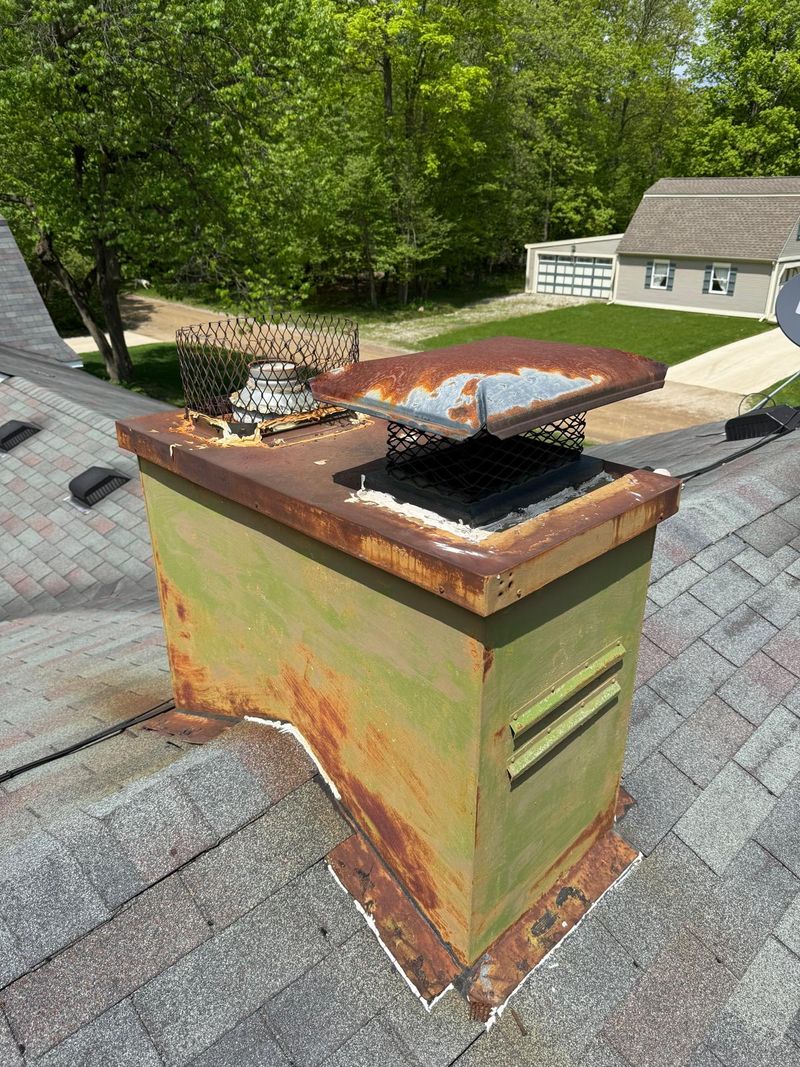
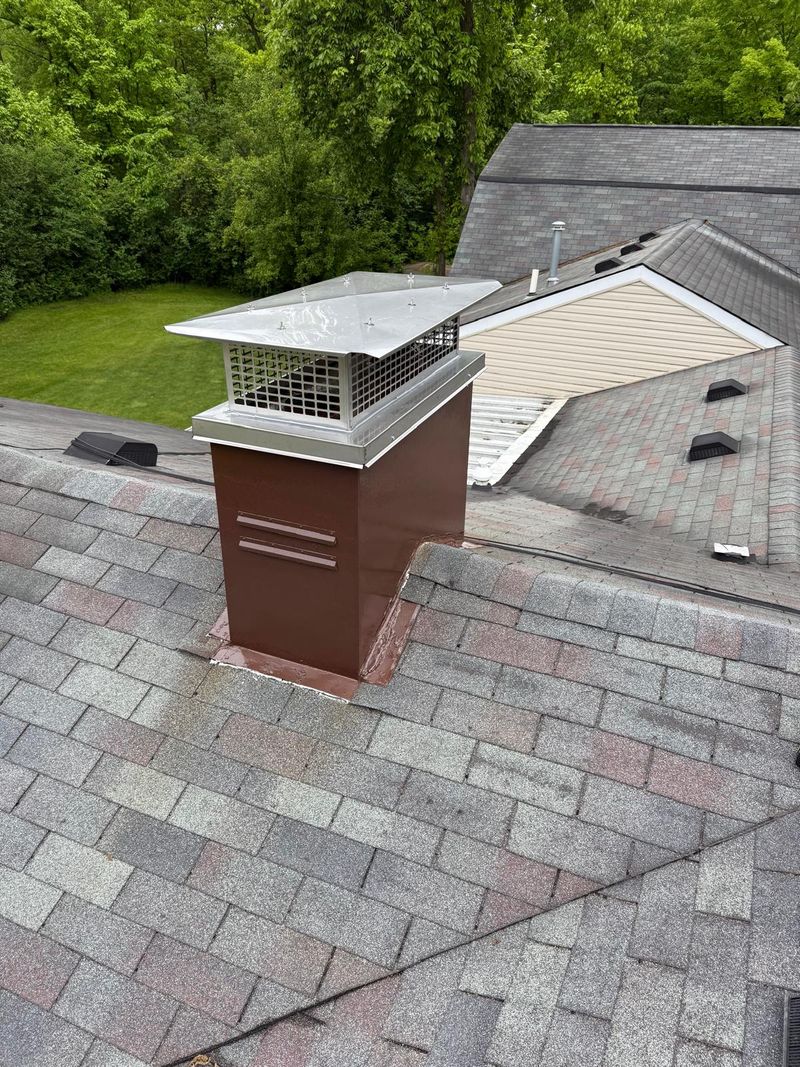
- New caps and chase covers
- Flashing where the chimney meets the roof
Where to start
Start with an inspection. Restoration work on the outside of a chimney should go on a chimney that's sound, so we look at both before we quote.
Signs a chimney is due
Brick faces that have flaked off, patches of mortar in a different color, white or rust staining down the sides, a crown with cracks or missing chunks, a top that leans, or paint and sealer peeling off the brick. Most homeowners notice it from the driveway before they notice anything inside.
What gets rebuilt and what gets repointed
We go over the chimney course by course. Brick that's sound with worn joints gets repointed. Single bricks that are cracked or have lost their face get cut out and replaced with the closest match we can find. Where the top of the chimney is loose, leaning, or has lost too many bricks to save, that section comes down to solid brick and gets relaid. We rebuild only the part that needs it, and the quote shows where that line is.
Old coatings, paint and staining
Painted brick, peeling sealers and smeared cement patches are common on older chimneys around here. Some come off with a masonry cleaner and a low-pressure rinse, and others need a stripper made for masonry. We try the method on a small area first, because high pressure and strong acid can wear the face off the brick and wash mortar out of the joints.
White staining is salt carried out of the masonry by water. Cleaning it off helps the look, but it comes back until the water that carries it is stopped.
Stone and block chimneys
Fieldstone chimneys have wide, uneven joints, and in places the old mortar has to come out several inches deep. We match the stone and the joint style, whether raised, flush or recessed, so the repair blends into the rest of the chimney.
The order of the work
Masonry and mortar come first, because everything else sits on them. The crown goes on next, then the cap or chase cover and the flashing where the chimney meets the roof. Cleaning comes last so the haze left from masonry work comes off with everything else. If you want a water repellent, it goes on after the new mortar has cured.
Flashing gets a close look on Michigan roofs. Snow and ice pile up on the uphill side of a chimney all winter, and that's where flashing leaks usually start.
How long it takes
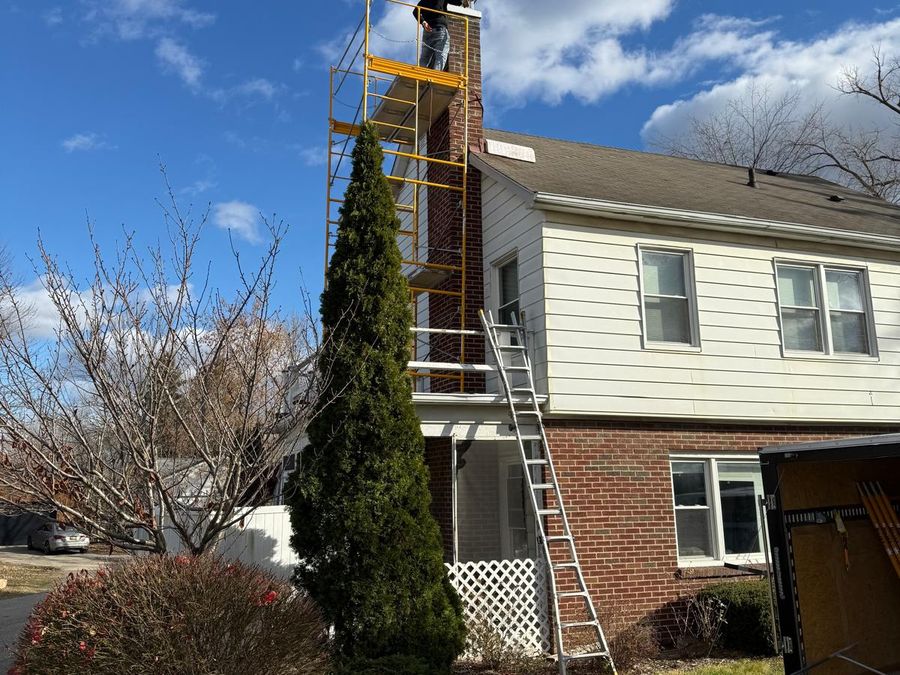
A restoration is usually several working days. It can be spread over a week or more when a new crown has to cure or spring rain keeps us off the roof. Roof brackets or scaffolding may stay up between visits. We tarp the roof and the plantings while we work and clean up at the end of each day.