What we take out of chimneys
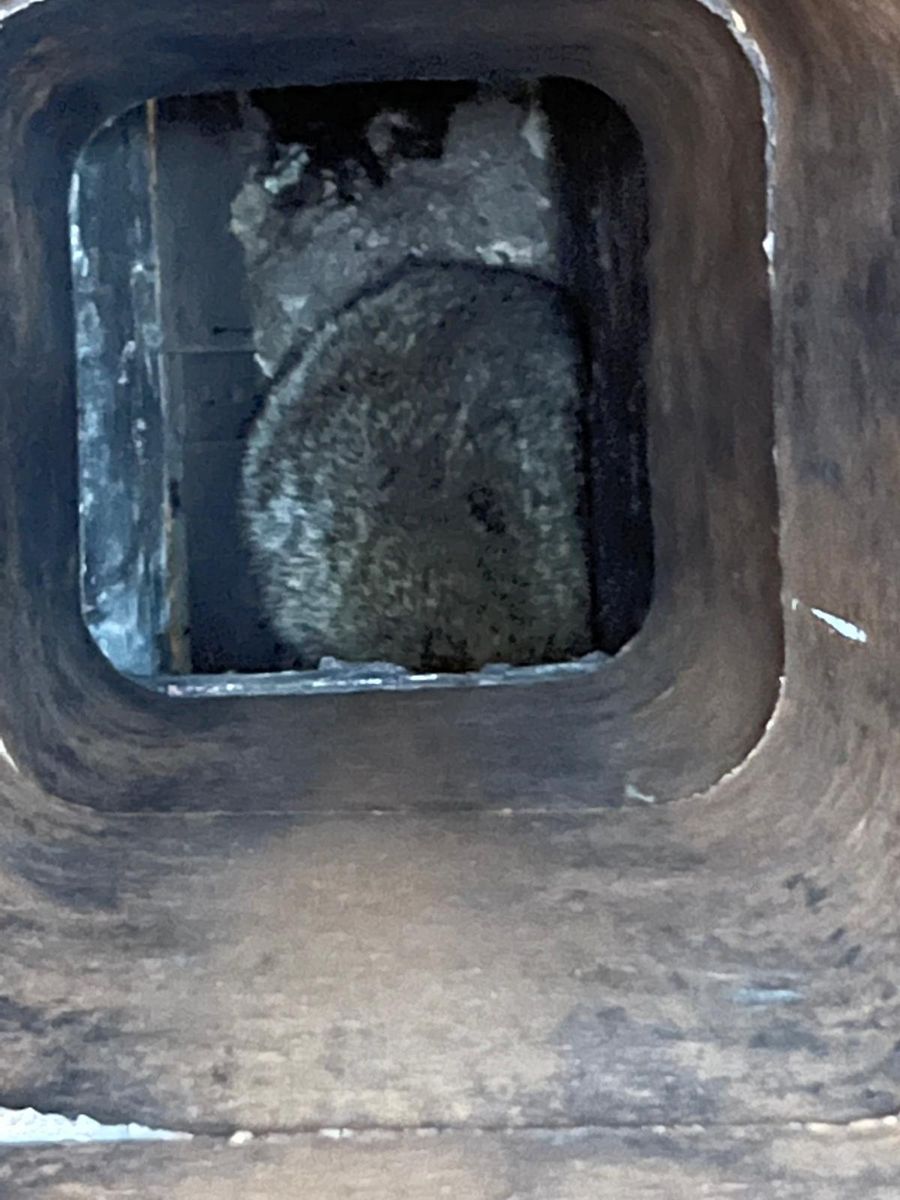
We remove squirrels, raccoons and birds such as sparrows, starlings and pigeons from the flue, the smoke shelf and the fireplace. The Michigan DNR lists these among the animals that can be removed as nuisance animals.
This is chimney work only. If the animal is in your attic, your walls, the crawl space or the yard, a wildlife control company is the right call.
Signs there's an animal in the chimney
- Scratching or thumping in the wall around the fireplace
- Chirping from the fireplace or the chimney top
- Twigs, leaves, droppings or feathers in the firebox
- A bad smell from the fireplace, which can mean an animal has died in the flue
- Smoke that backs up when it used to draw fine, because a nest can block the flue
- Birds or squirrels going in and out of the chimney top
While you wait for us
Please don't burn anything to drive it out. A nest in the flue can catch fire or keep smoke from getting out of the house, and an animal that's stuck can't climb away from the smoke.
Keep the damper and the fireplace doors closed so it can't get into the house. If you don't have doors, keep the room closed off. Don't reach into the firebox, and don't go up on the roof to look.
Don't put a cap on yet either. A cap over a flue with an animal inside traps it there.
Birds you hear in summer
Chirping from spring into late summer, with small birds diving into the chimney top, is most likely chimney swifts. Federal law protects swifts and their nests, so we won't pull a nest or cap the chimney while they're nesting. They leave on their own by late summer, and then the chimney can be swept and capped. Our chimney swifts guide explains the rules and what to do while you wait.
Bats have their own rules too. If you think you have bats, call us and we'll tell you what applies before anyone touches anything.
Young in the chimney
Raccoons and squirrels often have young in a chimney in spring and early summer. It can change how the job has to be done, so we'll tell you what we see and what it means before we start.
Keeping them out for good
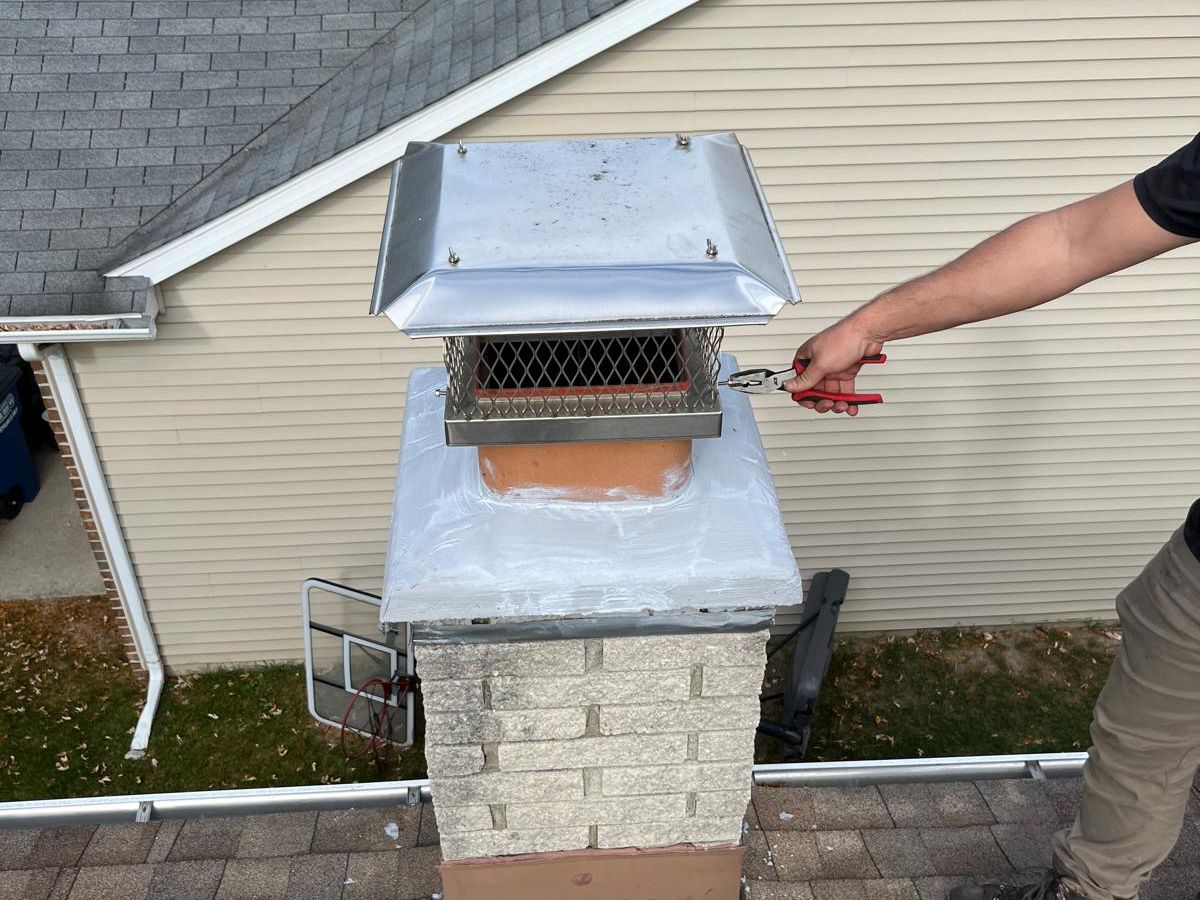
To a squirrel or a raccoon, a flue with nothing on top is a dry place to nest, and once one animal is out, the next can climb straight in. A chimney cap with a mesh screen closes it off, and it keeps rain out of the flue too. A single-flue cap is $375. Chimneys with more than one flue can often take one cap over all of them, made to size.
If you already have a cap and something still got in, the mesh may be bent or the cap may have come loose. We can re-seat a cap for $195 if it hasn't rusted through.
Checking for damage afterward
Animals can leave more behind than a nest. Twigs and droppings can stay on the smoke shelf, and a nest can hide damage to the flue or the damper. If you burn in the fireplace, have it looked over before the next fire. A chimney inspection is $49 and covers the flue, the damper and the top of the chimney.