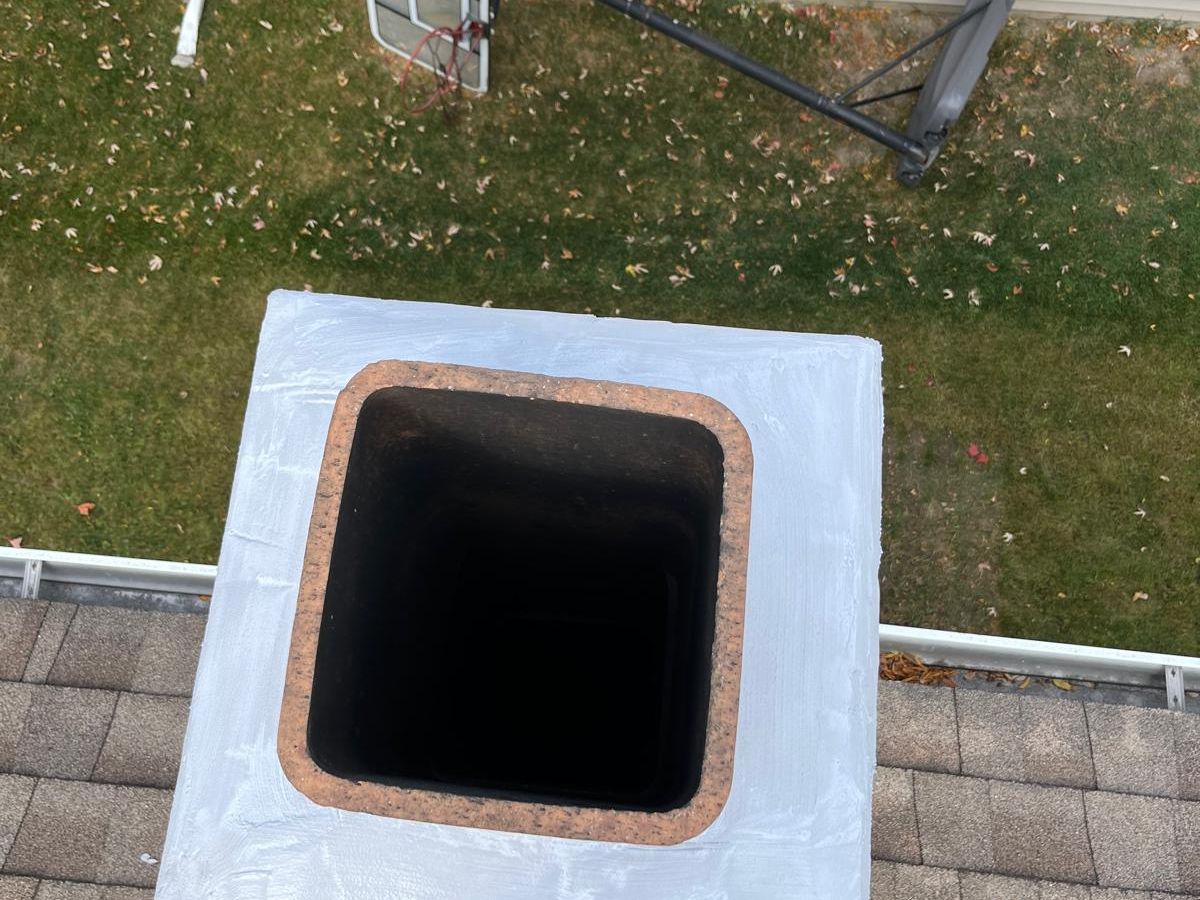
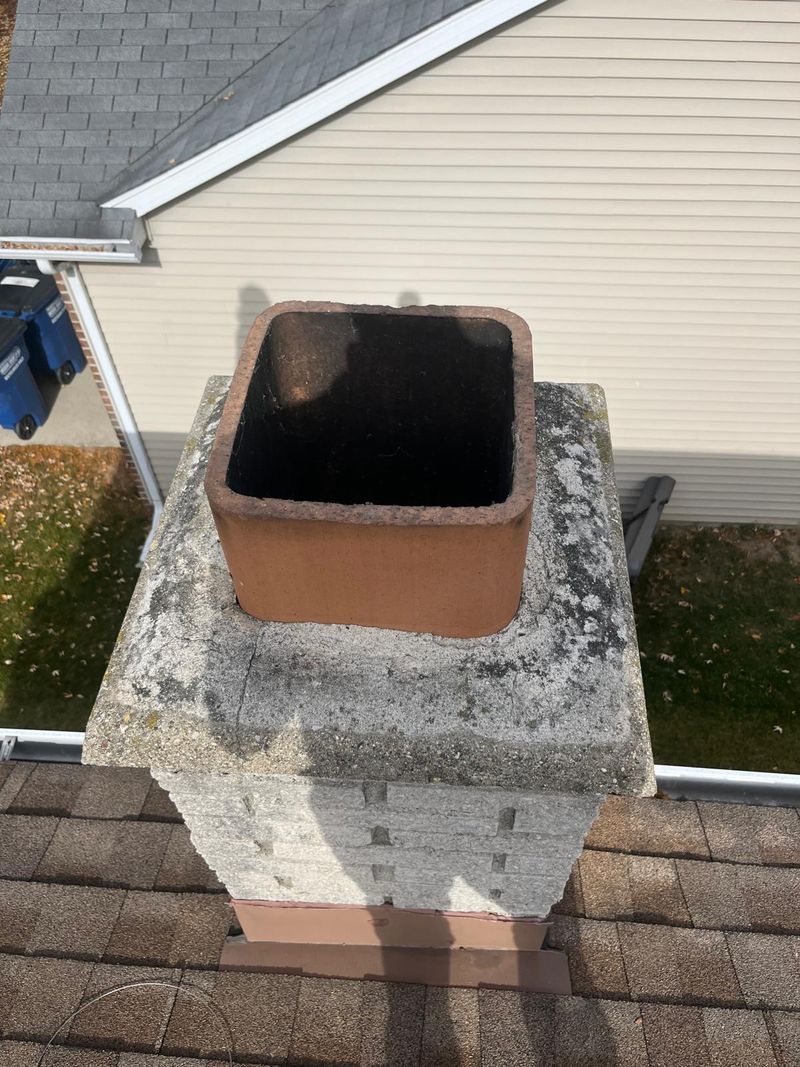
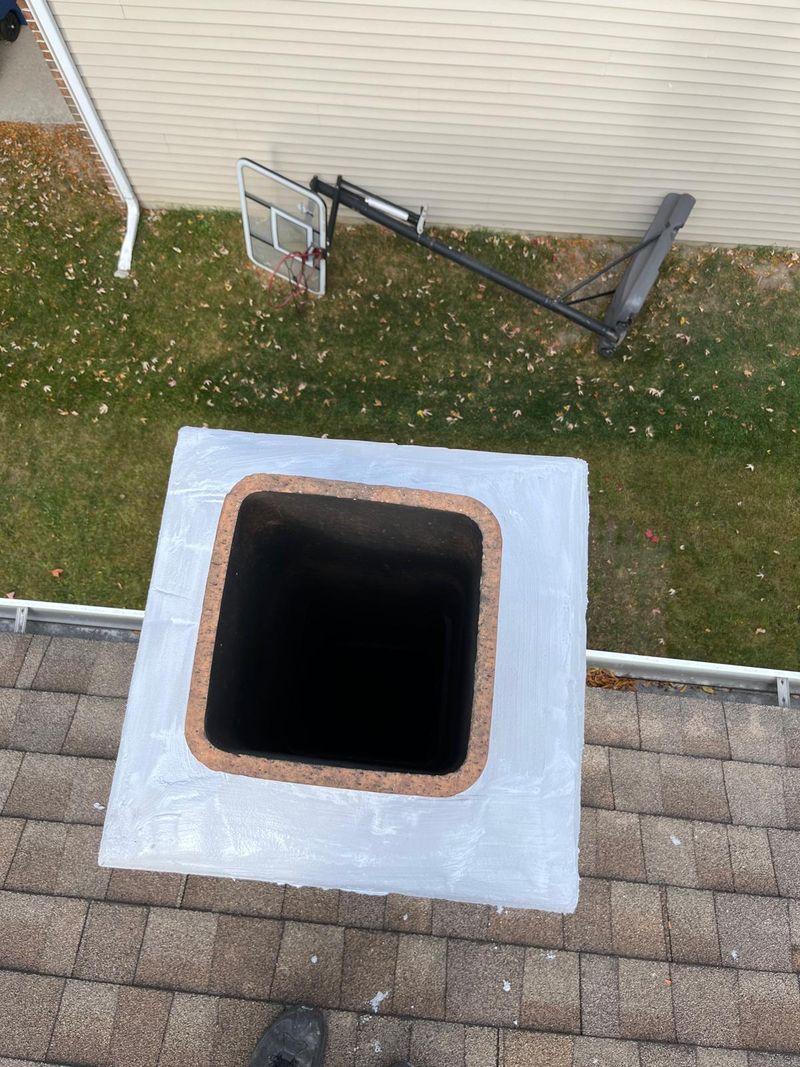
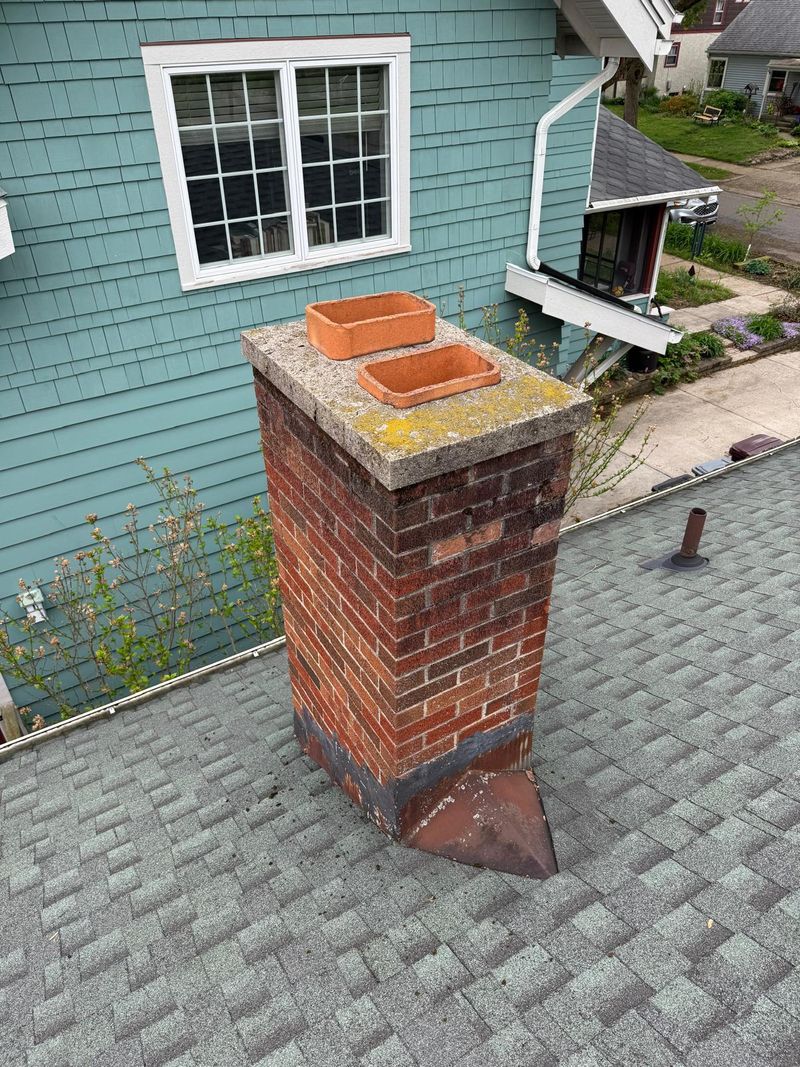
What chimney waterproofing is
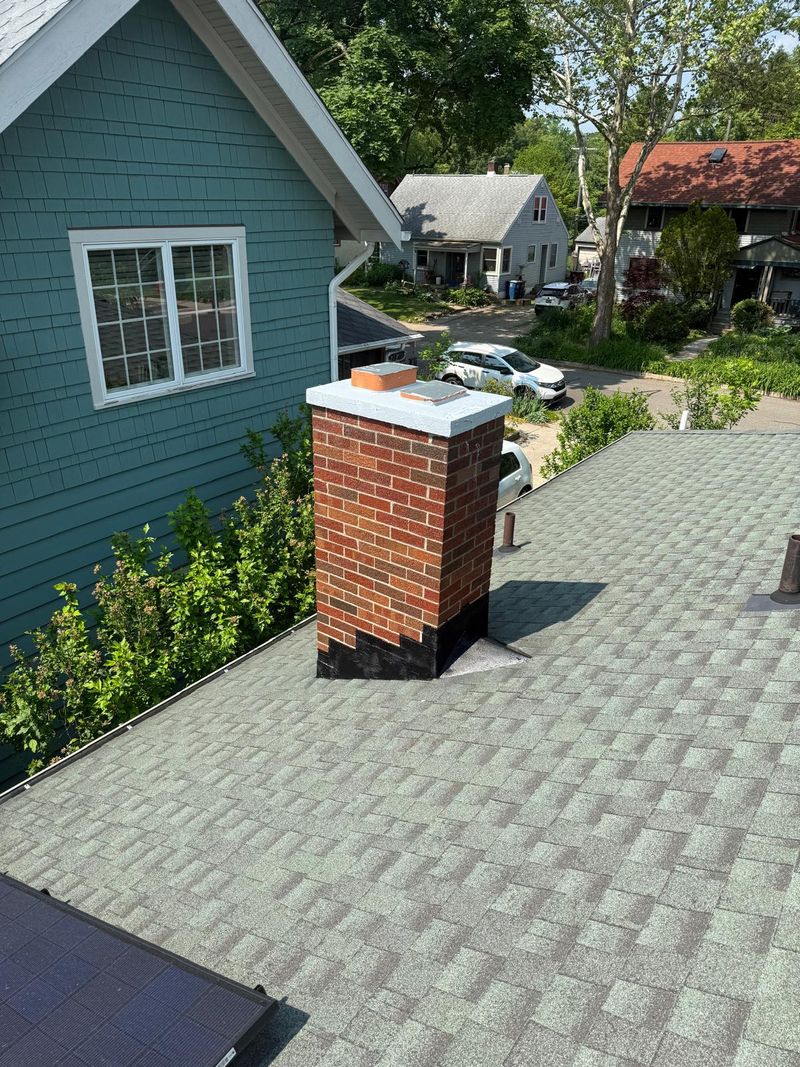
Chimney waterproofing is applying a water repellent to the chimney masonry to help keep water out of the brick.
When it makes sense
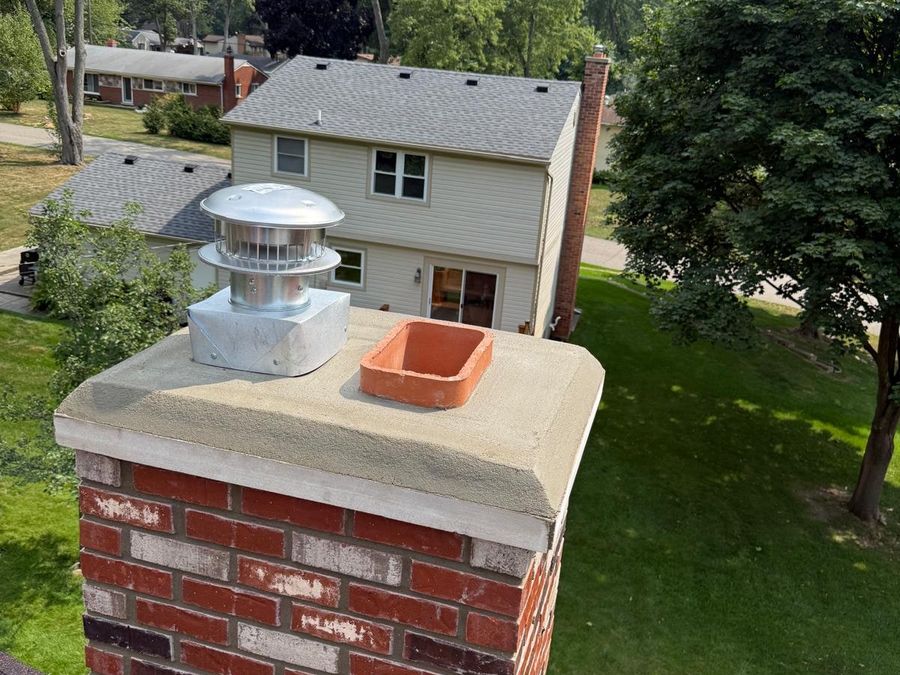
Waterproofing goes on sound masonry. On a chimney with failing mortar joints or a cracked crown, water keeps getting in around them, so those get repaired first. If you have an active leak, start with chimney leak repair.
What it won't do
It won't hide damage that's already there. Applied properly, it doesn't change how the brick looks.
Signs water is getting into the brick
Brick that stays dark for days after a rain, white powdery deposits on the face, brick faces flaking off, and a musty smell from the fireplace in wet weather. In Michigan these usually show up in spring, after a winter of snowmelt and a few weeks of steady rain.
How we do it
Repairs come first. The Brick Industry Association's Technical Note 6A says penetrating water repellents seldom stop water through cracks wider than 0.02 inch, so the place the water is getting in has to be found and fixed before a repellent is worth applying. If we've just repointed, the same note says the new mortar should cure at least 72 hours before a coating goes on.
We clean the brick and let it dry. Siloxane repellents bond with glass, so windows and skylights near the chimney get covered, along with the shingles and anything else we don't want it on.
The repellent goes on from the top down at the coverage rate the manufacturer lists. More isn't better here: the same note warns that putting on too much can cut down how well the brick breathes. A crown is concrete, and if it needs sealing it gets a crown sealer made for that job, separate from the brick repellent.
We use penetrating, vapor-permeable repellents of the silane and siloxane type. They soak into the brick and line the pores without closing them, so moisture inside the chimney can still dry out.
Film-forming sealers, such as acrylics, sit on the surface as a coating and often leave a shine. The note advises against putting film-forming coatings on brickwork in freeze-thaw climates, because water trapped behind the film can freeze and spall the face off the brick. Some sealers sold for brick are film formers, so we check what's already on a chimney before we put anything over it.
Timing and the day of the work
Most coatings need temperatures above 40 degrees F and below 100 degrees F, and it recommends avoiding windy days. In practice that puts waterproofing between mid-spring and late fall here, on a dry day with no rain in the forecast for the rest of the day.
On a chimney that needs no repairs, the application itself usually takes a few hours. The brick has to be dry, so after a rainy stretch we may move the date by a day or two. We take the masking down and clean up before we leave.
Repair, waterproofing, or both
The note even suggests a wait of several months after repairs to see whether a repellent is still needed, since repairs alone often stop the leak. We'll tell you if we think the repair is enough on its own, and quote the repellent separately so you can decide.