
Guide
White stains and crumbling brick on your chimney
Both come back to water. White stains show where it's moving through the brick. Flaking, crumbling brick shows where it has been freezing inside. Here's how to read each one and what fixes it.
By Moses Chimney. Updated .
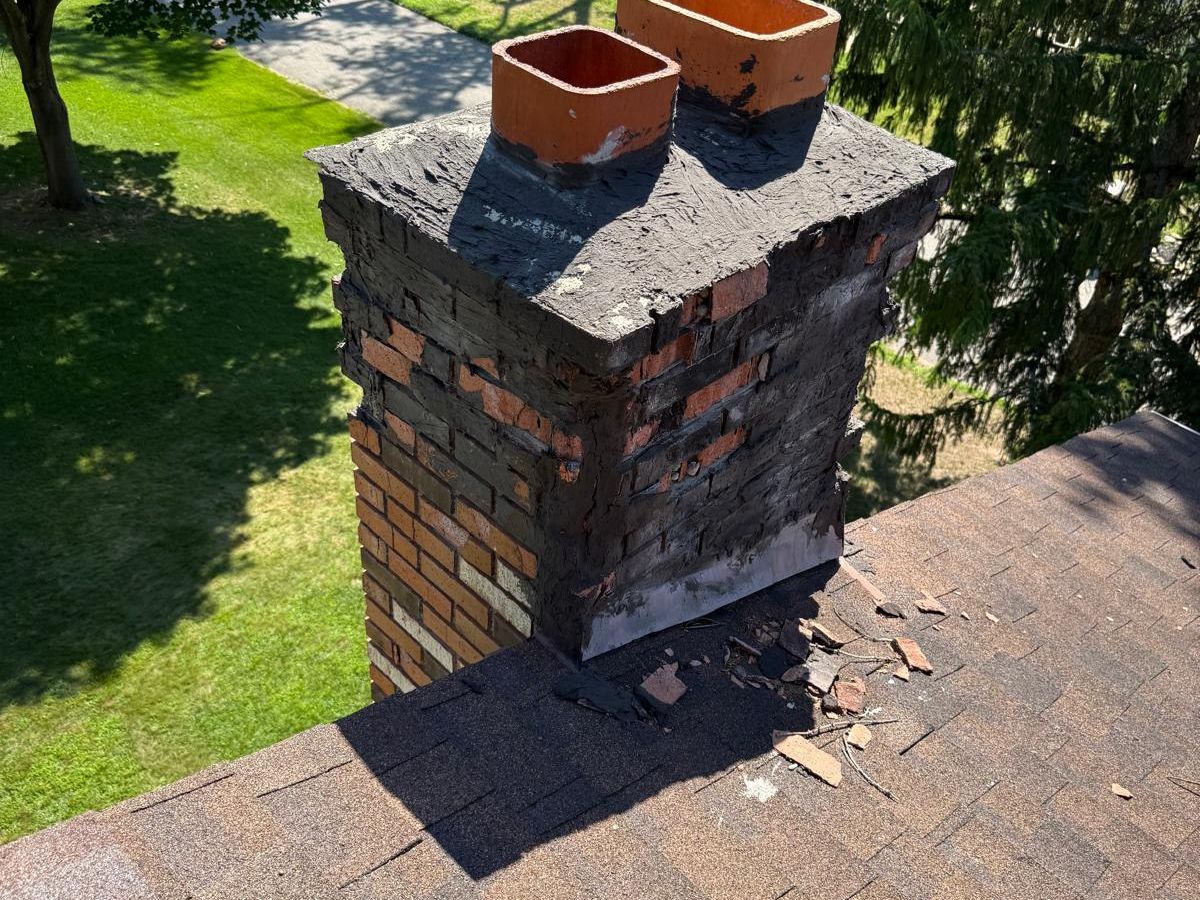
The white stains: efflorescence
The white, powdery film on brick is called efflorescence, and it's salt. Water picks up salts as it moves through mortar, brick or concrete. When that water dries at the surface, the salt stays behind.
On its own it doesn't hurt the brick. What it tells you is that water is getting into that part of the chimney and working its way out. On a chimney the water usually comes from the crown, the cap, the flashing or open mortar joints somewhere above the stain. It can also come from a gas furnace or water heater vented into the chimney, when the exhaust condenses inside the flue.
You can brush it off with a stiff dry brush, or scrub it with a stiff brush and plain water. If the water keeps getting in, the stain comes back.
The crumbling brick: spalling
When the face of a brick flakes, pops off in chips or crumbles away, that's spalling. Water soaks into the brick, freezes and expands, and winter after winter the face breaks away.
Michigan brick goes through a lot of those winters. The Great Lakes Integrated Sciences and Assessments center at the University of Michigan puts the Great Lakes region's average at about 42 freeze-thaw cycles a year.
Spalling is damage to the brick itself, and it keeps going as long as water keeps getting in. Repairs made with the wrong mortar, and coatings that trap moisture in the brick, can cause it too.
Why sealing the brick usually isn't the fix
The quick fix people get offered is a clear sealer over the whole chimney. The Brick Industry Association says a water repellent is no substitute for repointing mortar joints or replacing spalled brick, and that film-forming coatings shouldn't go on brick in places with freezing winters. A coating that holds moisture in can make spalling worse.
A breathable water repellent can help once the chimney is sound, with the crown intact, the joints filled and the damaged brick replaced. It goes on last.
What fixes it
The repair follows the water, so the order matters.
- Stop the water at the top: a cracked crown, a missing cap, loose flashing, or a furnace condensing in the flue.
- Repoint the mortar joints that have cracked or washed out.
- Replace the spalled bricks with brick matched to the house.
- Clean off the stains, and only then decide whether a water repellent makes sense.
If you're seeing either one, a standard chimney inspection shows where the water is getting in and how far the damage goes, before anyone quotes you a repair.
Sources
- Brick Industry Association: Technical Note 23A, Efflorescence
- Brick Industry Association: Technical Note 46, Maintenance of brick masonry
- Brick Industry Association: Technical Note 6A, Colorless coatings for brick masonry
- Great Lakes Integrated Sciences and Assessments, University of Michigan: Freeze-thaw cycles
More guides
How often should a chimney be cleaned?
Why the standard is a yearly inspection, when a chimney actually needs sweeping, and what to check before your first fire.
Leak around the chimney: call a roofer or a chimney company?
Where chimney leaks start, which ones a roofer handles, and which ones need a chimney company.
Level 1, 2 or 3 chimney inspection: which one you need
What each inspection level covers, when you need a Level 2, and what a regular home inspection leaves out.
Rusted chase cover or missing chimney cap
What rust streaks under a chimney mean, why chase covers rust, and when a cap or cover needs replacing.
Book an inspection or cleaning
Pick a day and a 3-hour arrival window online. If you'd rather talk it through, call (248) 266-9991.