
Guide
Water heater venting alone into an old chimney
When a new high-efficiency furnace is vented out the side of the house, a gas water heater can be left venting by itself into a chimney sized for both. It may not draft well, and its exhaust can condense inside the chimney. A liner sized for the water heater is the usual fix.
By Moses Chimney. Updated .
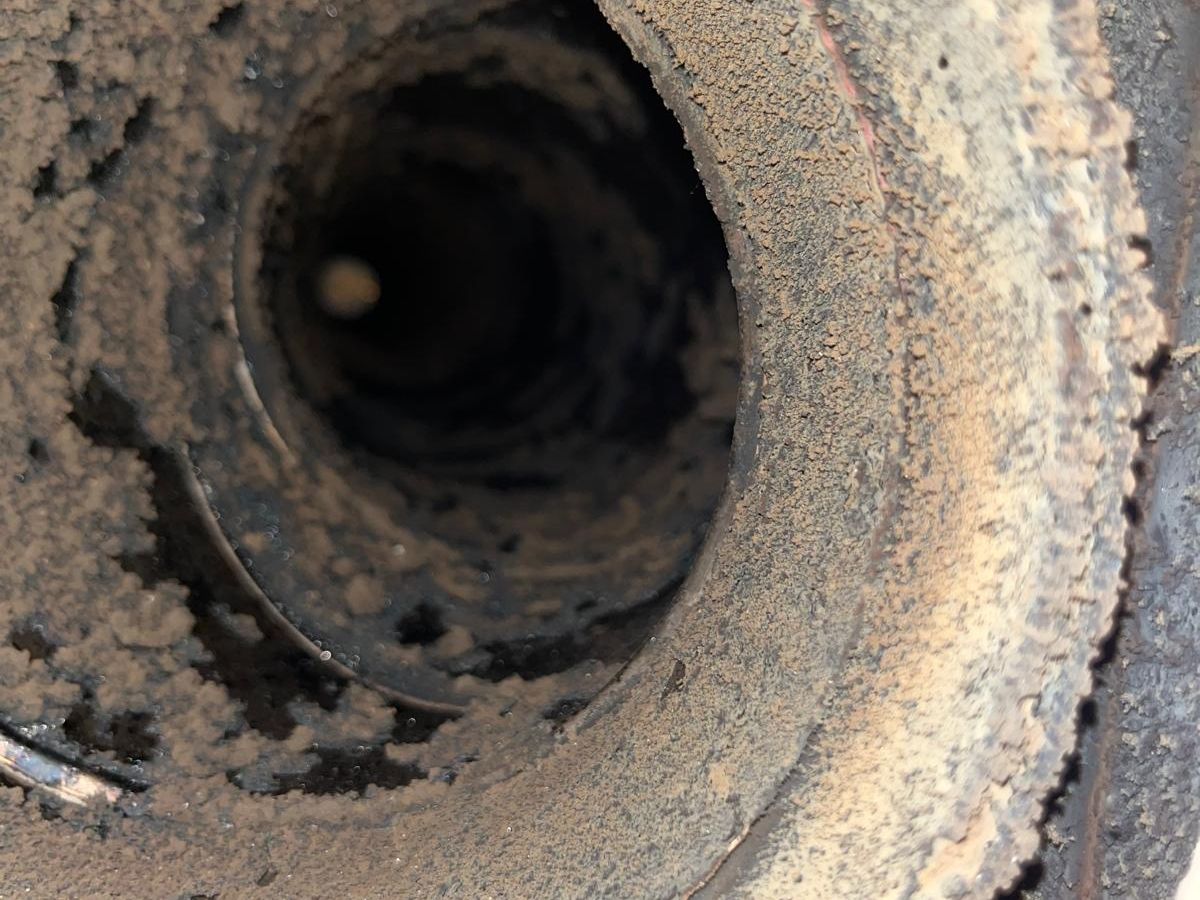
How a water heater ends up on its own
In many older houses, the gas furnace and the gas water heater both vented into the same brick chimney. When the furnace gets replaced with a high-efficiency model, the new one usually vents out the side of the house through plastic pipe. The water heater stays connected to the chimney by itself.
Home inspectors call that an orphaned water heater. Nothing about it looks wrong from the basement. The furnace is new, the water heater works, and the vent pipe still goes into the chimney the way it always did.
Why the chimney stops working the way it did
An older furnace sent a lot of hot exhaust up the chimney, and that heat kept the flue warm. A water heater on its own sends up much less.
Two things follow from that. A small water heater in a large, cold flue may not draft properly. And when the inside of the flue stays below the dew point of the exhaust, the water vapor in it condenses on the tile, the brick and the mortar. That condensate is acidic, and over time it eats away at the mortar joints from the inside.
When the draft is weak, exhaust can spill out at the draft hood, the open collar on top of a gas water heater where the vent pipe connects, and into the basement. The Center for Energy and Environment names orphaned water heaters as one cause of spillage, along with kitchen range hoods, bath fans and dryers pulling air out of the house.
What homeowners notice
Some of the signs show up in the basement, and some on the outside of the chimney.
- Damp brick, water stains or wet debris at the base of the chimney or in the cleanout, even in dry weather
- White, powdery stains on the chimney brick, inside or out
- Rust stains or rust flakes on the vent pipe, at the draft hood, or in the bottom of the chimney
- Loose or missing mortar, and brick faces flaking off the chimney
- Damage or heavy rust at the draft hood, which home inspectors treat as a sign the water heater has been backdrafting
The white stains are salt left behind by water moving through the brick. White stains and crumbling chimney brick covers what they mean.
What the code says
The fuel gas chapter of the International Residential Code covers this directly. When an appliance is permanently disconnected from an existing chimney, the chimney has to be resized as needed to control condensation and to give the appliances still using it the draft they need.
The Chimney Safety Institute of America also calls for a Level 2 chimney inspection when a heating appliance is added or replaced. A new furnace counts, even if the furnace itself no longer uses the chimney.
The usual fix: a liner sized for the water heater
The standard answer is a metal liner run down the inside of the existing chimney, sized to the water heater. The smaller flue warms up quickly, drafts better and keeps condensation to a minimum.
We inspect the chimney and the venting first, including a camera run through the flue, then size the liner to the water heater. The liner size is listed in your quote.
The other route is to replace the water heater with one that doesn't use the chimney, such as a power-vented or sealed-combustion gas model or an electric heat pump water heater. If the water heater is near the end of its life anyway, that's worth pricing before you line the chimney for it.
Ask before the new furnace goes in
Structure Tech, a Minnesota home inspection company, notes that many furnace installers only deal with the vent connector and leave the chimney itself alone. If you're replacing a furnace, ask the installer what happens to the water heater's venting. If the answer is that it stays in the old chimney as it is, book a Level 2 inspection before or right after the swap.
Carbon monoxide alarms
Whatever state the chimney is in, put in carbon monoxide alarms. The Consumer Product Safety Commission recommends a CO alarm on each level of the home and outside the sleeping areas. Consumers Energy and DTE recommend having the heating system, the water heater and other fuel-burning appliances inspected by a professional every year.
If a CO alarm goes off, or people in the house get headaches, nausea or dizziness that could be carbon monoxide, leave the house and call 911. Don't go back in until the problem has been found and fixed.
Sources
- International Code Council: 2015 International Residential Code, G2425.15 Existing chimneys and vents
- International Code Council: 2015 International Residential Code, G2425.15.1 Size
- American Society of Home Inspectors: Orphaned water heaters, it's adopt-a-chimney time
- Structure Tech Home Inspections: Gas appliances venting into chimneys
- Center for Energy and Environment: Appliance gas spillage
- Chimney Safety Institute of America: Chimney inspection levels
- U.S. Consumer Product Safety Commission: CO alarms
- Consumers Energy and DTE Energy: Carbon monoxide safety tips
More guides
How much does a chimney inspection cost in Metro Detroit?
What an inspection, a cleaning and a camera inspection cost, what a Level 2 costs, and how repairs are priced.
How often should a chimney be cleaned?
Why the standard is a yearly inspection, when a chimney actually needs sweeping, and what to check before your first fire.
Leak around the chimney: call a roofer or a chimney company?
Where chimney leaks start, which ones a roofer handles, and which ones need a chimney company.
White stains and crumbling brick on your chimney
What white stains and flaking brick on a chimney tell you, and why sealing the brick usually isn't the fix.
Level 1, 2 or 3 chimney inspection: which one you need
What each inspection level covers, when you need a Level 2, and what a regular home inspection leaves out.
Rusted chase cover or missing chimney cap
What rust streaks under a chimney mean, why chase covers rust, and when a cap or cover needs replacing.
Birds chirping in your chimney: what to do about chimney swifts
Why you can't remove nesting chimney swifts, how long they stay, and what to do once they've gone.
After a chimney fire: what to do next
Signs of a chimney fire, what to do during one, and why a Level 2 inspection comes before the next fire.
Chimney damper stuck, rusted or missing
Throat and top-sealing dampers, the signs of a stuck or rusted damper, and what a repair involves.
Chimney flashing leaks: what to look for and who fixes it
How chimney flashing works, why tar patches fail, and who to call when it leaks.
Book an inspection or cleaning
Pick a day and a 3-hour arrival window online. If you'd rather talk it through, call (248) 266-9991.