What the crown does
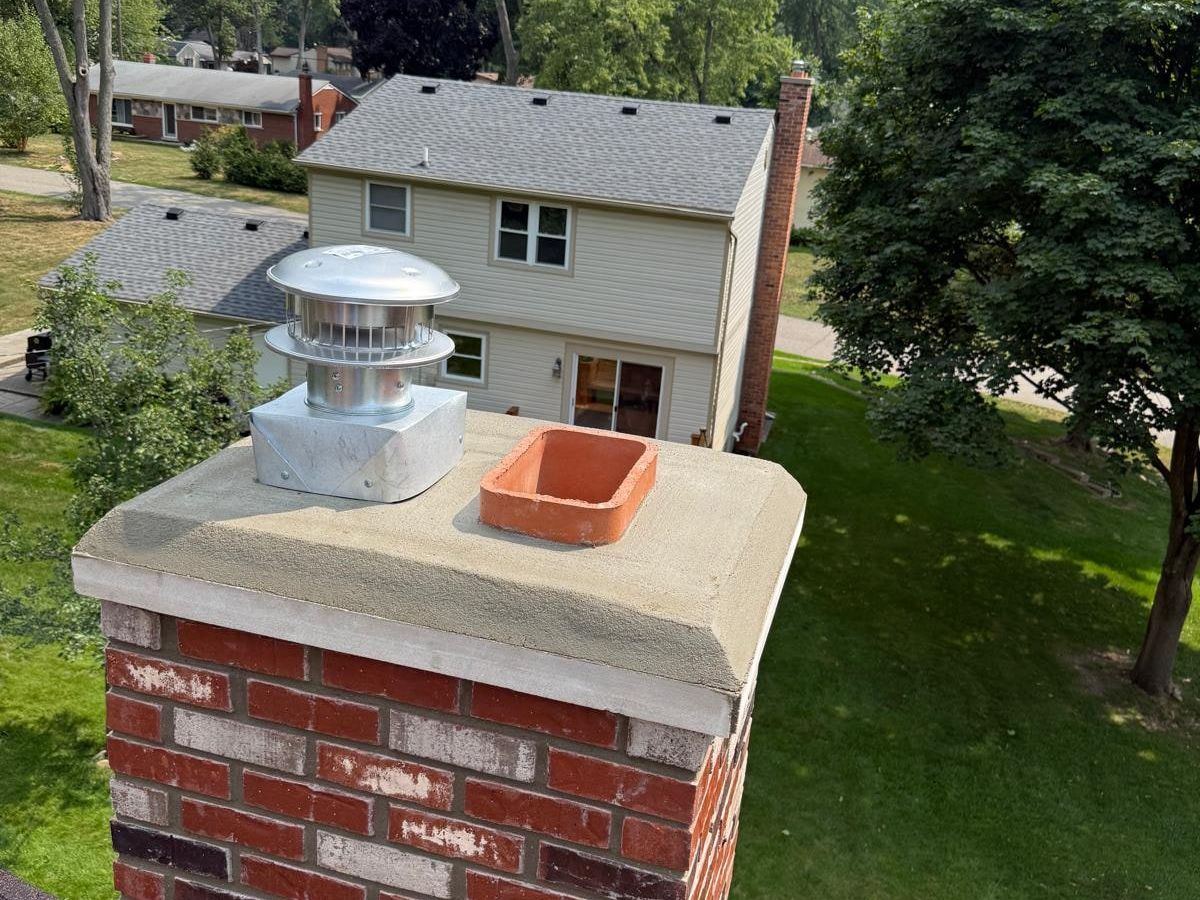
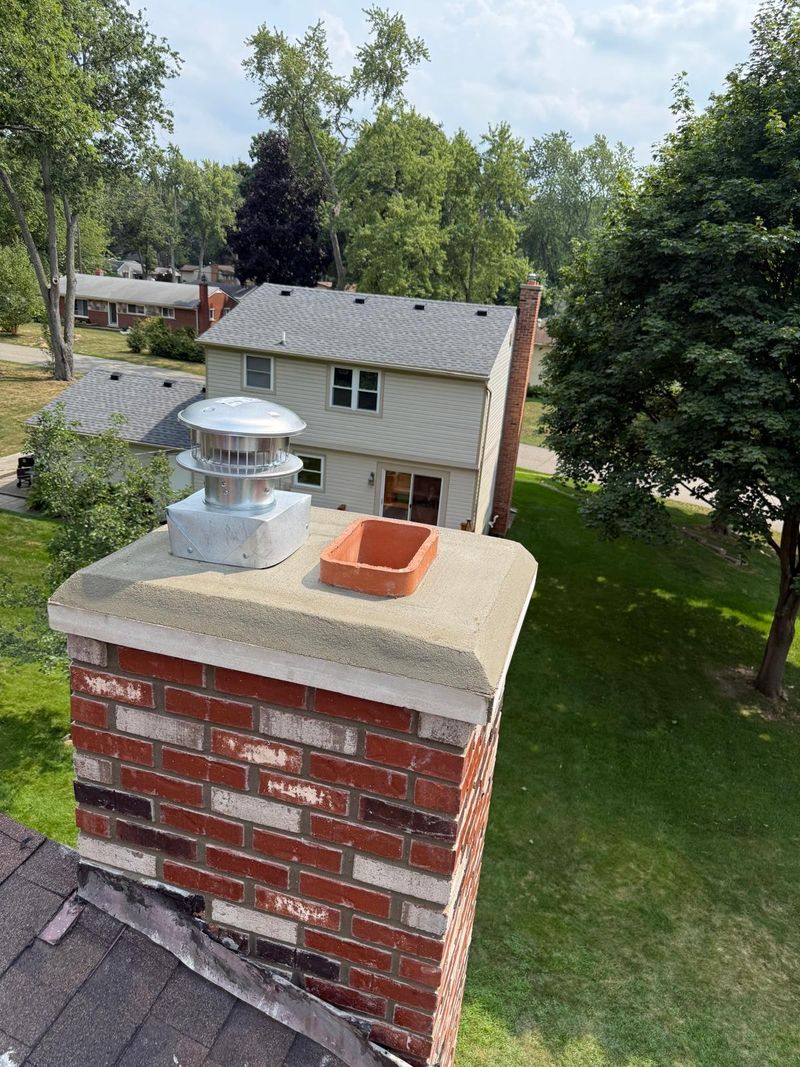
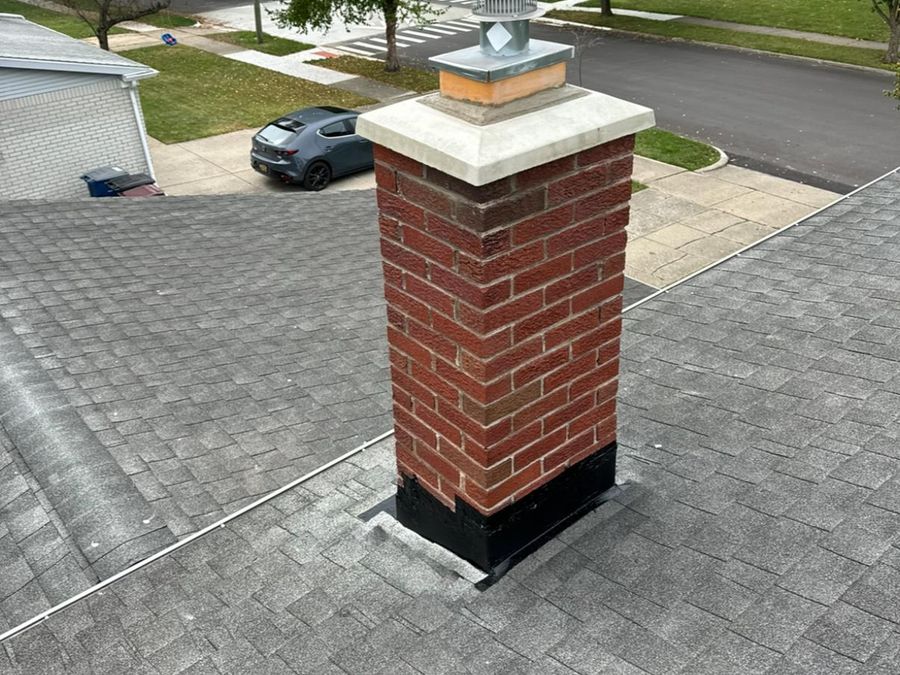
The crown sheds rain and snowmelt off the top of the chimney and away from the brick. Once it cracks, water runs down into the chimney instead of off it.
What you might see from the ground
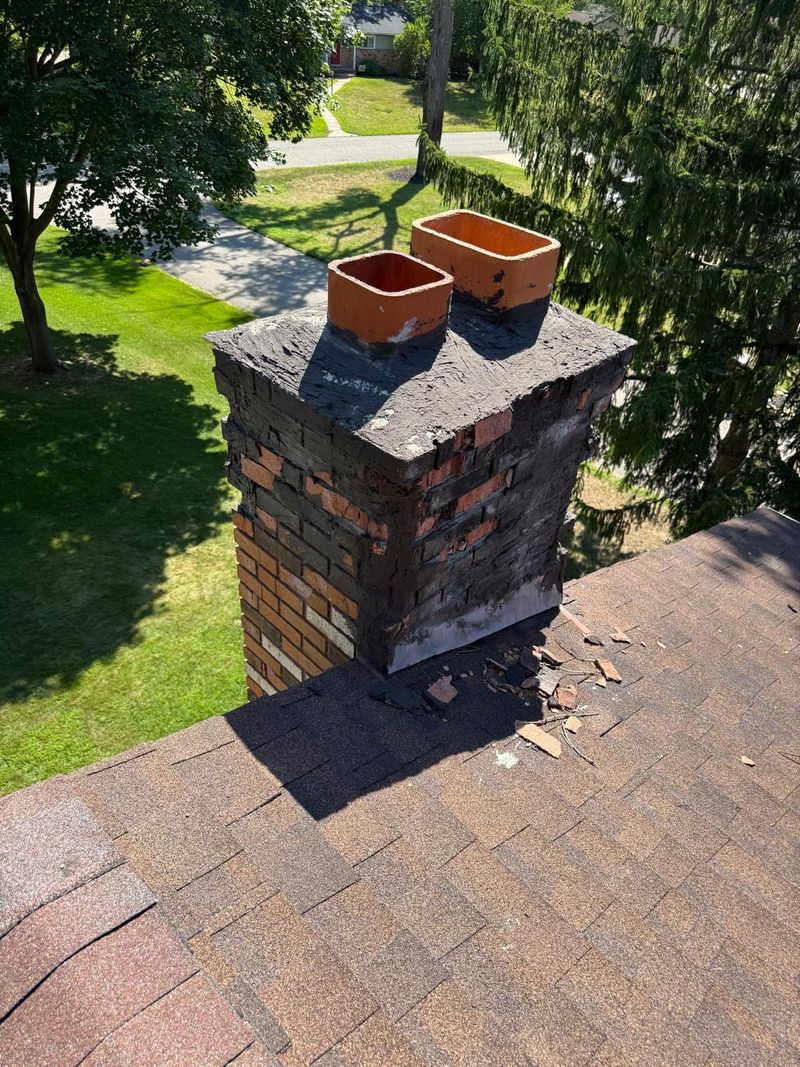
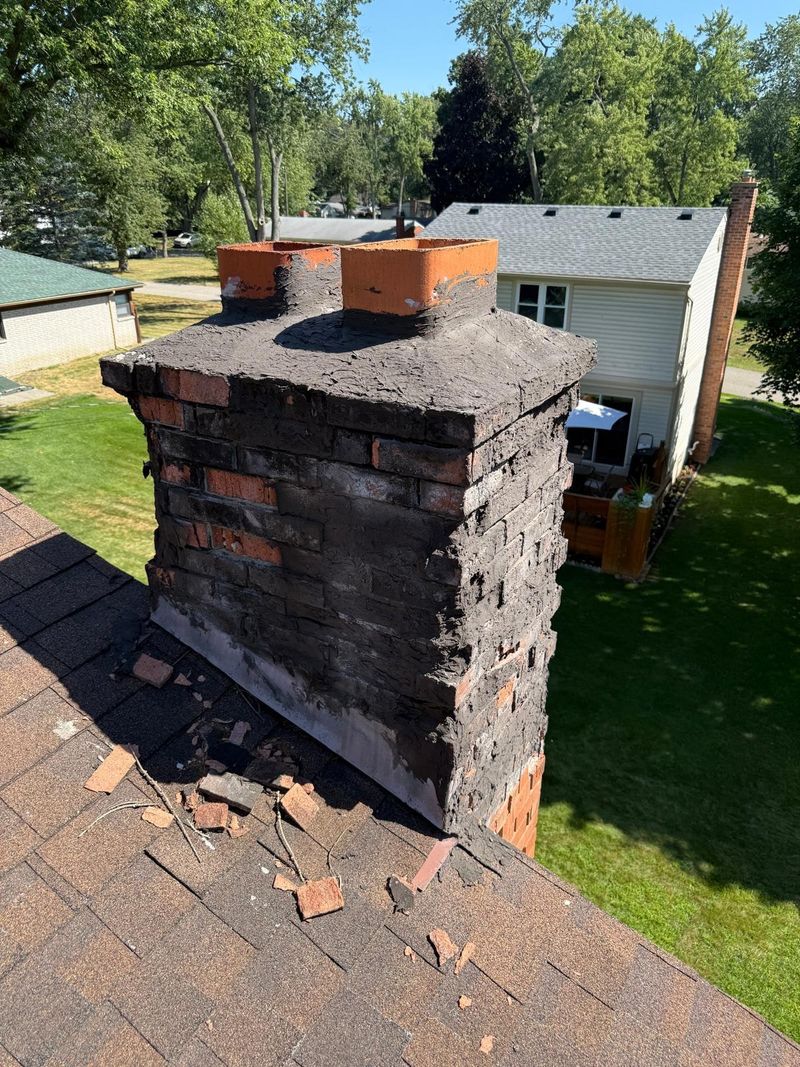
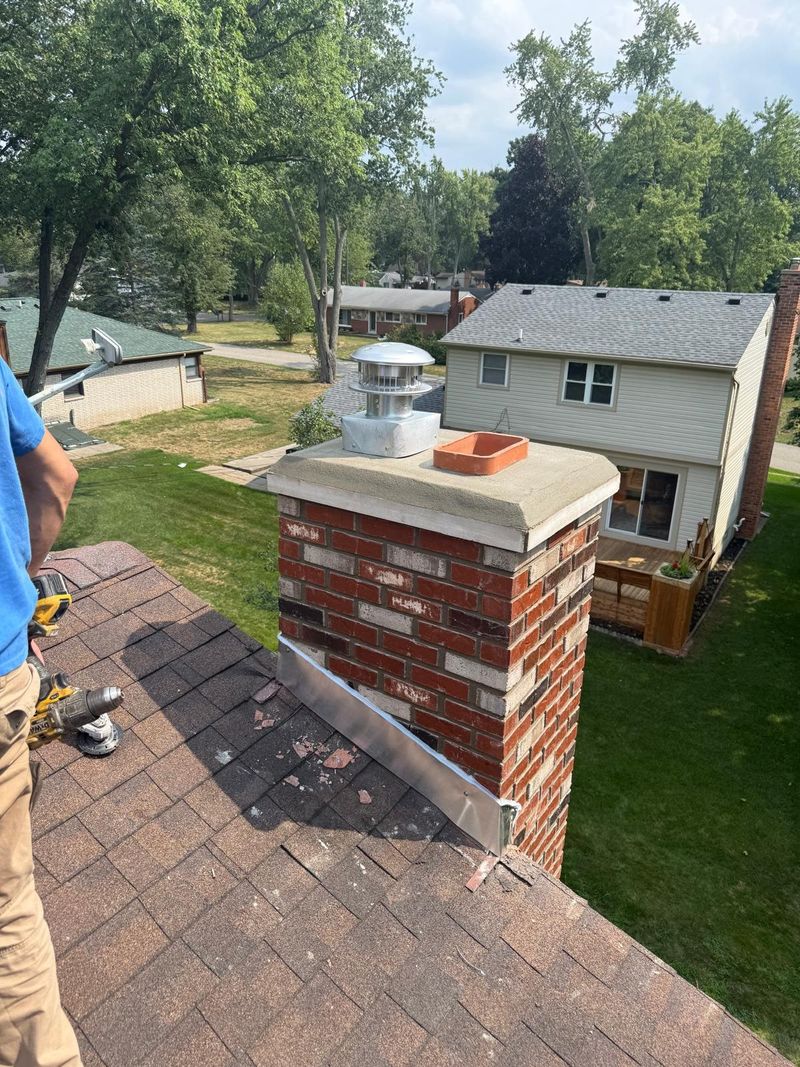
Cracks across the top, crumbling edges, moss or lichen growing on it, or gaps where it meets the flue tiles. A pair of binoculars from the yard shows more than you'd expect.
What we check up close
On the roof we look at how deep the cracks go, whether the edge of the crown has been feathered thin, and whether the crown runs out past the face of the brick or stops flush with it. We check the joint around each flue tile too, since that's often where water gets in first. Flaking brick on the top few courses, or a water stain on the wall or ceiling near the fireplace, can also lead back to the crown.
Repair or rebuild
A crown repair fixes cracks and worn areas in the slab. A crown rebuild means removing the old crown and building a new one across the top of the chimney. We'll tell you which one yours needs and why.
How we repair a crown
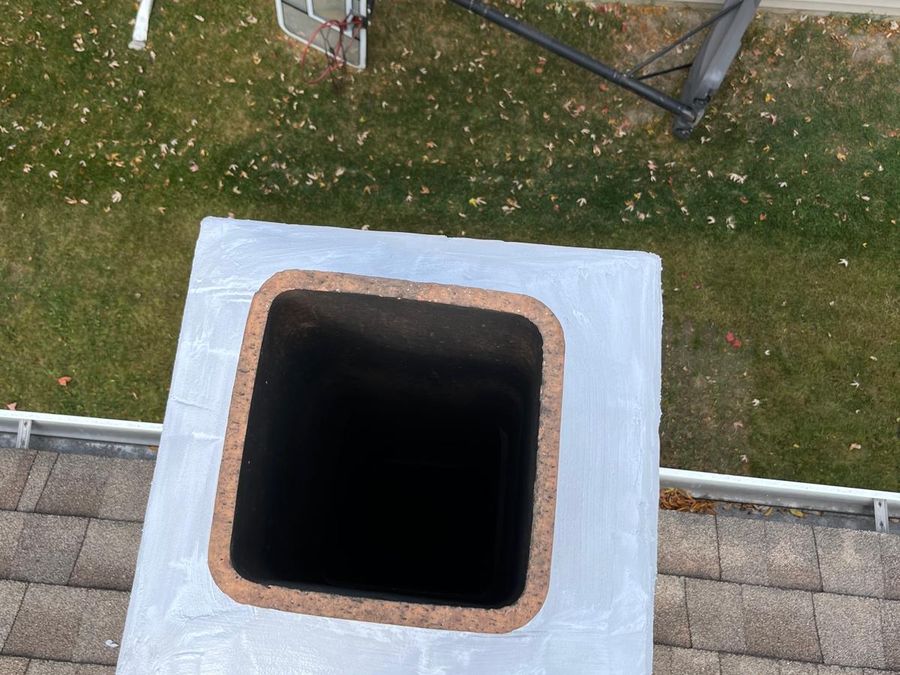
When the slab is solid and the cracks are fine, we clean the cracks out, fill them, and coat the top with a flexible sealer made for chimney crowns. The joint where the crown meets each flue tile gets resealed with a flexible sealant, because the tile grows and shrinks every time the flue heats up and cools down. A repair won't add an overhang or thicken a crown that was built too thin. On those crowns, patching slows the damage down but doesn't change how the crown sheds water.
How we rebuild a crown
We break the old crown out down to sound brick. Loose brick on the top course comes off and gets relaid so the new crown sits on something solid.
Forms go up around the top of the chimney so the new crown runs out past the brick, with a drip groove on the underside. Water drops off the edge there instead of running down the face of the chimney.
The Brick Industry Association's Technical Note 19B on residential chimneys calls for a bond break between the brickwork and the crown, so the crown can move without cracking the brick below it. The same note warns against feathering a poured crown thin at the edges, calls for reinforcement to control cracking, and says the flue liner should stand at least 2 inches above the top of the crown.
We don't pour concrete tight against the flue tiles. A gap is left around each one and sealed with a flexible sealant, and the top is sloped from the flues out to the edges so rain and snowmelt run off.
How long it takes
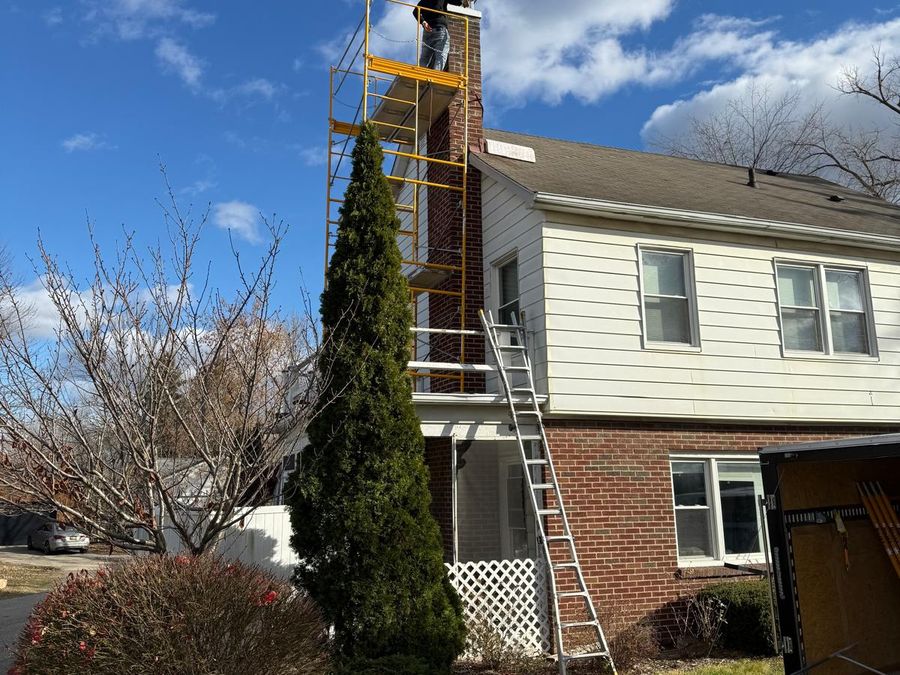
A crown repair is usually a few hours on the roof. A rebuild is usually one to two days, depending on the size of the chimney and how many flues come through it. Fresh concrete can't freeze or take a heavy soaking while it sets, so we watch the forecast. Late in the fall, the overnight lows decide whether a rebuild goes ahead or waits for spring.
On the day, we tarp the roof and the plantings under the chimney. The broken-out crown comes down in buckets, and we haul the debris away and clean up before we leave.
What a Michigan winter does to a crown
A crown is the flattest part of the chimney, so it holds snow. Snow that melts in the afternoon and refreezes overnight pushes water into every hairline crack, and each freeze opens the crack a little wider. A crack that looks small in October can be wide open by April.