
Guide
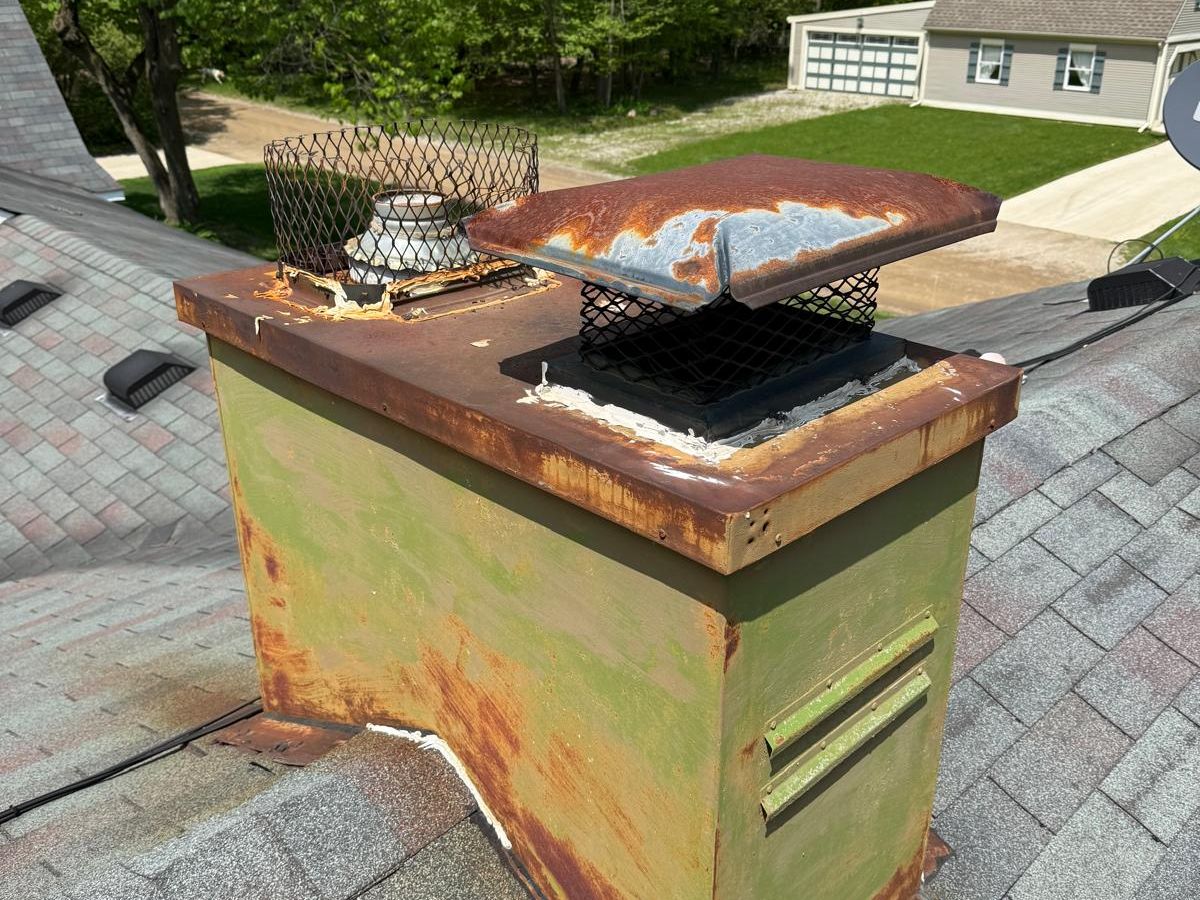
Rusted chase cover or missing chimney cap
Rust running down the siding under a chimney usually means the chase cover on top has rusted. A flue with no cap is open to rain and animals. Here's what each part does and what to do about it.
By Moses Chimney. Updated .
What a chase cover is
Many houses have a framed chimney, called a chase: a wood box on the roof covered in siding to match the house, with metal flue pipe running up inside it. The chase cover is the metal lid on top. It keeps rain and snow out of the framing and has an opening for each flue.
Why chase covers rust
Galvanized covers rust with time. Many older ones are flat, so water sits on top, and once the coating wears through, the rust spreads. Rust streaks running down the siding under the cover are usually the first thing homeowners notice.
By the time the streaks show, water can already be getting past the cover into the framing. Left alone, that can mean rotted wood inside the chase and water inside the house.
Paint it or replace it?
Painting a rusted cover changes how it looks from the ground. The rust is usually worse on the underside, where paint doesn't reach, and a flat cover keeps holding water.
A replacement cover is made to the size of your chase, with a top shaped so water runs off and an edge that drips clear of the siding. Stainless steel holds up to Michigan weather far better than galvanized.
We measure the chase before we quote, because a cover that doesn't fit leaks at the edges.
Chimney caps
A chimney cap is the metal hood over the top of the flue, usually with mesh around the sides. It keeps rain from falling straight down the flue, and the mesh keeps birds, squirrels and raccoons out.
People sometimes call the concrete slab on top of a brick chimney the cap. That's the crown, and it's a different repair.
If an animal is already in the chimney
Don't light a fire to drive it out. A nest in the flue can catch fire or keep smoke from getting out of the house. Once the animal is out, a cap keeps the next one from getting in.
If you're seeing rust streaks, or there's no cap on the flue, we'll measure it and send you a written quote for the replacement.
More guides
How often should a chimney be cleaned?
Why the standard is a yearly inspection, when a chimney actually needs sweeping, and what to check before your first fire.
Leak around the chimney: call a roofer or a chimney company?
Where chimney leaks start, which ones a roofer handles, and which ones need a chimney company.
White stains and crumbling brick on your chimney
What white stains and flaking brick on a chimney tell you, and why sealing the brick usually isn't the fix.
Level 1, 2 or 3 chimney inspection: which one you need
What each inspection level covers, when you need a Level 2, and what a regular home inspection leaves out.
Book an inspection or cleaning
Pick a day and a 3-hour arrival window online. If you'd rather talk it through, call (248) 266-9991.