
Guide
Chimney damper stuck, rusted or missing
A damper that won't open, won't close all the way or has rusted through can usually be repaired, or replaced with a new damper at the top of the chimney. Here's how to tell what you have and what's wrong with it.
By Moses Chimney. Updated .
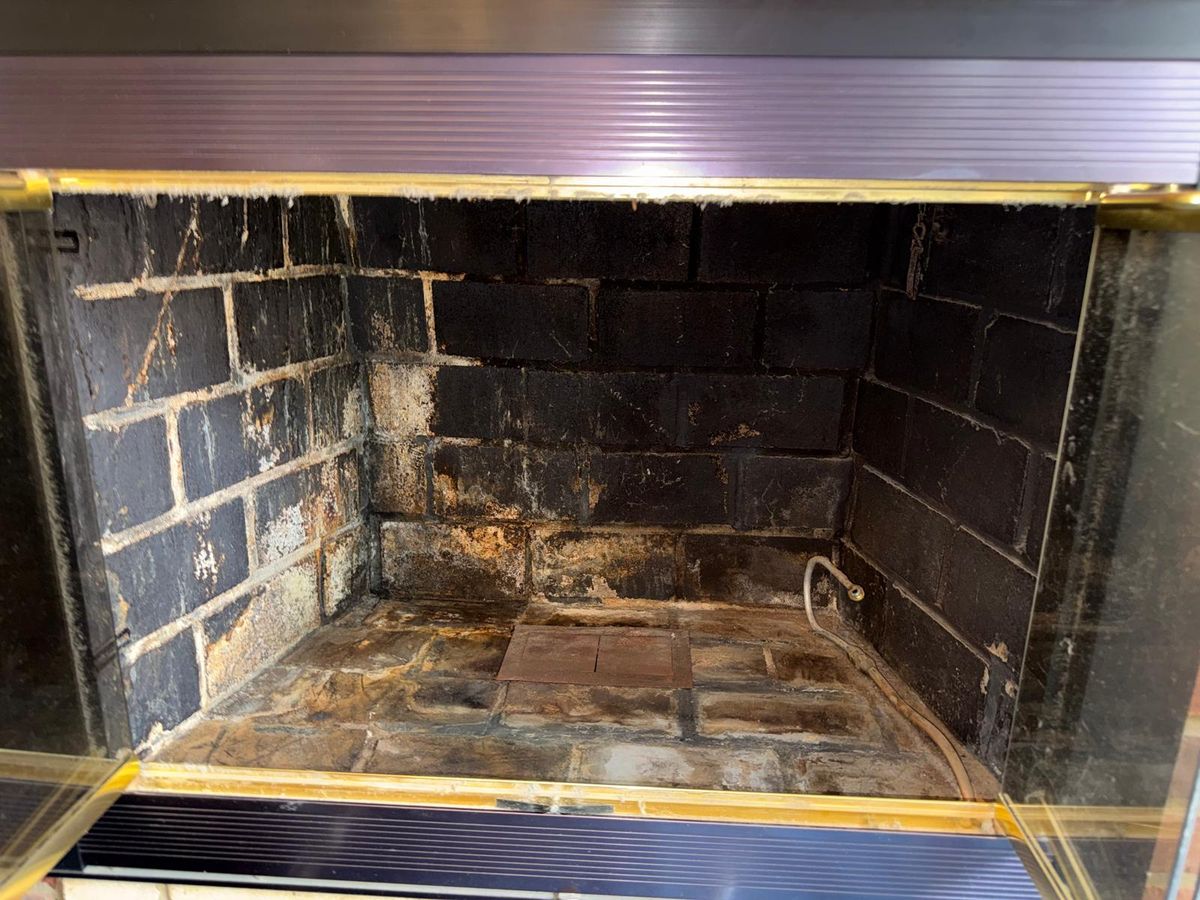
What the damper does
The damper is a hinged metal plate that closes off the chimney when the fireplace isn't in use. The Chimney Safety Institute of America says it should be fully open before you light a fire.
When it works, you open it, burn, let the fire go out completely, and close it again. When it doesn't, you either can't burn safely or you've got an open hole to the outside all winter.
Throat dampers and top-sealing dampers
There are two kinds, and which one you have changes the fix.
A throat damper is a metal plate just above the firebox, worked by a handle or a lever inside the fireplace. Most older fireplaces have one. To see it, open the fireplace doors and look straight up with a flashlight.
A top-sealing damper sits at the top of the chimney, on the flue. A cable runs down the flue to a handle in the firebox. The CSIA says a tight-sealing top-mounted damper can cut down the air coming down the chimney, which also cuts down the smell of creosote in the house.
Signs the damper has a problem
You'll usually notice one of these first.
- The handle won't move, or the plate only opens partway.
- It won't close all the way, and you feel cold air at the fireplace in winter.
- A smoky, sooty smell from the fireplace, worse in summer. The CSIA says that smell is creosote in the chimney, and it's usually worse when it's humid and the air conditioning is on.
- Rust flakes or bits of metal in the firebox. Water getting into the chimney from the top rusts the damper plate and frame.
- The handle turns but nothing moves, because the linkage or the cable has broken.
- There's no damper at all. In some older fireplaces the plate has rusted away or been taken out.
A warped damper is also one of the signs the CSIA lists that a chimney fire has happened. If yours is bent out of shape, read what to do after a chimney fire before you light another one.
Drafts and heat loss
A fireplace with the damper open or missing is an open path from the room to the outside. In a Michigan winter the house's warm air goes up the flue, and cold air comes down it when the house pulls air in.
The CSIA says air being drawn down a chimney is a symptom of pressure problems in the whole house. A damper that seals helps. Letting some make-up air into the house somewhere else is the other half of the fix.
An open fireplace isn't much of a heater even when it works. The EPA says most of the heat from a fireplace goes out the chimney. So the damper matters more for the hours the fireplace sits unused than for the hours it's burning.
What a repair or replacement involves
We look at the damper during a sweep or a chimney inspection, because the fix depends on what's actually wrong.
A throat damper that's just stuck can often be freed up and cleaned. A broken handle or linkage can be replaced. When the plate or the frame has rusted through or warped, we'll go over whether a new throat damper fits, or whether a top-sealing damper is the better fix for that chimney.
A top-sealing damper goes on the top of the flue with its cable run down to the firebox. It seals at the top, so rain and cold air stay out of the flue as well as the room. It's also an option when the throat damper is missing or can't be repaired.
If the fireplace has a gas log set, the damper has to stay open while the logs burn, the way the log set's instructions call for. That's covered in gas fireplace service.
There's more on how we check dampers, fireboxes and firebrick on the wood fireplaces, inserts and stoves page. We'll tell you what's wrong with the damper and what it takes to fix it before any work starts.
More guides
How much does a chimney inspection cost in Metro Detroit?
What an inspection, a cleaning and a camera inspection cost, what a Level 2 costs, and how repairs are priced.
How often should a chimney be cleaned?
Why the standard is a yearly inspection, when a chimney actually needs sweeping, and what to check before your first fire.
Leak around the chimney: call a roofer or a chimney company?
Where chimney leaks start, which ones a roofer handles, and which ones need a chimney company.
White stains and crumbling brick on your chimney
What white stains and flaking brick on a chimney tell you, and why sealing the brick usually isn't the fix.
Level 1, 2 or 3 chimney inspection: which one you need
What each inspection level covers, when you need a Level 2, and what a regular home inspection leaves out.
Rusted chase cover or missing chimney cap
What rust streaks under a chimney mean, why chase covers rust, and when a cap or cover needs replacing.
Birds chirping in your chimney: what to do about chimney swifts
Why you can't remove nesting chimney swifts, how long they stay, and what to do once they've gone.
After a chimney fire: what to do next
Signs of a chimney fire, what to do during one, and why a Level 2 inspection comes before the next fire.
Chimney flashing leaks: what to look for and who fixes it
How chimney flashing works, why tar patches fail, and who to call when it leaks.
Water heater venting alone into an old chimney
Why a water heater left alone in an old chimney can condense and spill, and why a sized liner is the usual fix.
Book an inspection or cleaning
Pick a day and a 3-hour arrival window online. If you'd rather talk it through, call (248) 266-9991.