
Guide
After a chimney fire: what to do next
If you think the chimney is on fire, get everyone out of the house and call 911. After it's out, don't use the fireplace again until the chimney has been swept and inspected.
By Moses Chimney. Updated .
During a chimney fire
A fast-burning chimney fire is hard to miss: loud cracking and popping, a lot of dense smoke and an intense, hot smell. People often say it sounds like a freight train or a low-flying airplane.
If you hear or see that, get everyone out of the house and call 911 from outside. Don't go up on the roof, and don't wait to see whether it burns itself out.
Most chimney fires go unnoticed
Most chimney fires are slow and quiet. A slow-burning fire doesn't have the air or fuel to roar, but it still gets hot enough to damage the chimney. Inside a masonry chimney the temperature can reach around 2,000°F.
So plenty of people find out they had a chimney fire months later, when a sweep or an inspection turns up the evidence.
Signs a chimney fire has happened
These are the signs we look for:
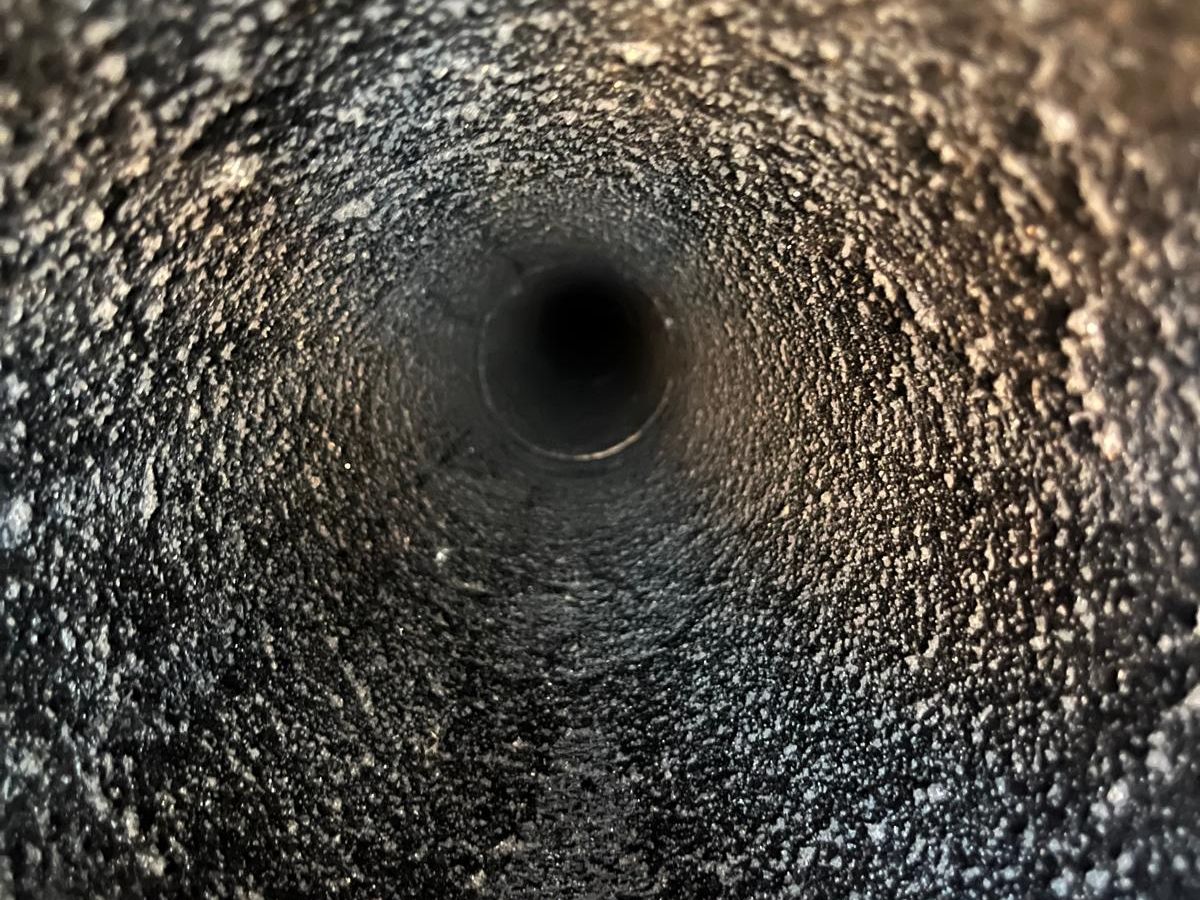
- Creosote that looks puffy or honeycombed, where it used to be a flat coating
- A warped damper or other warped metal parts
- Cracked or collapsed flue tiles
- A rain cap that's discolored or bent out of shape
- Flakes and chunks of creosote on the roof or the ground below the chimney
- Roofing damaged by hot creosote
- Cracks in the outside of the chimney, or smoke coming through the mortar joints
Some of these you can see from the yard. Most of the ones inside the flue need a camera to find.
Don't use it until it's swept and checked
After a chimney fire, don't light the fireplace again until the chimney has been swept and checked. The heat can crack flue tiles, open up mortar joints and fatigue metal parts, and that damage often can't be seen from the fireplace or the roof.
The next fire goes up the same flue. If the lining is cracked, heat and gases can reach the brick and the wood framing around it.
Why the inspection is a Level 2
The inspection levels come from NFPA 211, the national standard for chimneys and fireplaces. It calls for a Level 2 after an operating malfunction or an outside event that's likely to have damaged the chimney, and a chimney fire is that kind of event.
We sweep the chimney first, then run a camera through the flue to look for cracked flue tiles and failed mortar joints, and check the metal parts for separation, warping and buckling. A Level 2 chimney inspection includes that camera run, plus the parts of the chimney in the attic and basement. There's more on what each level covers in Level 1, 2 or 3 chimney inspection.
Photos for your insurance claim
Ask for the damaged parts of the chimney, and any creosote found, to be photographed before the chimney is swept. Once it's swept, the creosote that shows a fire happened is gone.
Ask for copies of the inspection photos and a written repair estimate to send to your insurance adjuster. Chimney fire damage is often covered by homeowners insurance, but your own policy decides that, so call your insurer early.
Take your own photos too, before anything gets cleaned up: the roof around the chimney if you can see it from the ground, anything on the ground below, and the fireplace.
What the repair can look like
The repair depends on the damage. It can be a few replacement flue tiles, a new liner, or rebuilding the chimney. You'll see the camera footage before anyone quotes you a repair.
Creosote built up in the flue is what burns in a chimney fire. Once the chimney is repaired, a yearly sweep keeps that buildup down. How often to clean a chimney covers the schedule.
More guides
How much does a chimney inspection cost in Metro Detroit?
What an inspection, a cleaning and a camera inspection cost, what a Level 2 costs, and how repairs are priced.
How often should a chimney be cleaned?
Why the standard is a yearly inspection, when a chimney actually needs sweeping, and what to check before your first fire.
Leak around the chimney: call a roofer or a chimney company?
Where chimney leaks start, which ones a roofer handles, and which ones need a chimney company.
White stains and crumbling brick on your chimney
What white stains and flaking brick on a chimney tell you, and why sealing the brick usually isn't the fix.
Level 1, 2 or 3 chimney inspection: which one you need
What each inspection level covers, when you need a Level 2, and what a regular home inspection leaves out.
Rusted chase cover or missing chimney cap
What rust streaks under a chimney mean, why chase covers rust, and when a cap or cover needs replacing.
Birds chirping in your chimney: what to do about chimney swifts
Why you can't remove nesting chimney swifts, how long they stay, and what to do once they've gone.
Chimney damper stuck, rusted or missing
Throat and top-sealing dampers, the signs of a stuck or rusted damper, and what a repair involves.
Chimney flashing leaks: what to look for and who fixes it
How chimney flashing works, why tar patches fail, and who to call when it leaks.
Water heater venting alone into an old chimney
Why a water heater left alone in an old chimney can condense and spill, and why a sized liner is the usual fix.
Book an inspection or cleaning
Pick a day and a 3-hour arrival window online. If you'd rather talk it through, call (248) 266-9991.