
Guide
Birds chirping in your chimney: what to do about chimney swifts
Chirping in the chimney in late spring or summer is most likely chimney swifts, and federal law protects them and their nest while they're raising young. Leave them alone until they've gone, then have the chimney swept.
By Moses Chimney. Updated .
What you're hearing
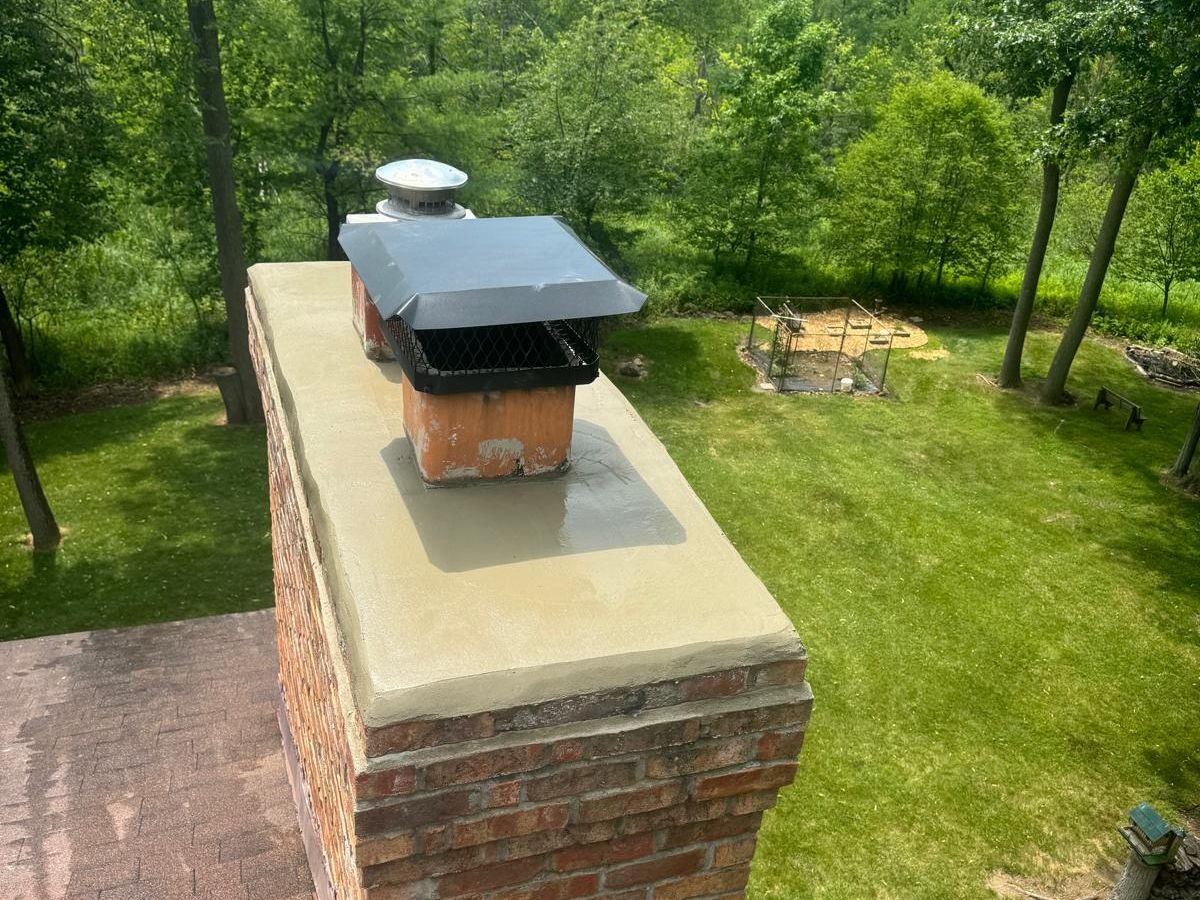
Chimney swifts are small birds that nest inside chimneys and other hollow structures. The adults give a loud, chattering twitter. Once the eggs hatch, the young beg loudly each time a parent drops into the chimney with food, and the U.S. Fish and Wildlife Service says that stretch lasts about three weeks.
The nest is a small half-saucer of twigs glued together with the birds' saliva and stuck to the inside wall of the flue, well below the top. You won't see it from the fireplace, and you usually won't see the birds either, apart from a few darting in and out of the chimney top.
When they're here
Chimney swifts spend the winter in South America, in the upper Amazon basin. The Fish and Wildlife Service says they arrive in the U.S. in March or April and leave in August or September. In southeast Michigan, the Washtenaw Bird and Nature Alliance says they reach Ann Arbor in April, and breeding pairs pick a chimney soon after.
Audubon puts a typical clutch at 4 or 5 eggs. Both parents sit on them for 19 to 21 days, and the young leave the nest about 28 to 30 days after they hatch. So from the first egg to the last bird flying out is roughly seven weeks. It feels longer when they're over the living room, but it does end.
Why you can't take them out or cap the chimney
Chimney swifts are protected under the federal Migratory Bird Treaty Act. The Fish and Wildlife Service says harassing, injuring or killing swifts, their eggs or their nests is illegal.
The Service says it's illegal to destroy a nest with eggs or chicks in it, or while the young still depend on it. A permit to remove an active nest is only issued in very limited cases, and the usual answer is to wait until the nest is no longer in use.
That's why we won't sweep a chimney, pull a nest or put a cap on while swifts are nesting in it. A cap on top would keep the adults out and the young in.
What to do while they're nesting
Leave the fireplace alone until they're gone. The Fish and Wildlife Service suggests keeping the fireplace damper closed. It also keeps the noise down.
Don't light a fire, and don't try to smoke them out or push anything up the flue. If you're not sure the birds are swifts, call us and describe what you're hearing and when. We'll tell you whether it sounds like swifts or something that needs a different fix.
After they leave
The Fish and Wildlife Service recommends cleaning the chimney between September or October and March or April, when the swifts are gone. In Michigan, that lines up with getting the chimney swept before you start using the fireplace for the season. The sweep takes out the old nest with the soot and creosote.
Then you can decide about a cap. The Fish and Wildlife Service asks homeowners not to cap the chimney or screen it, so swifts have somewhere to nest. If you don't use the chimney, leaving it open is one way to help them. If you do use it, or you want to keep rain and other animals out, a chimney cap goes on once the chimney has been swept and the nest is gone.
Raccoons, squirrels and other birds are different
The rules above are about chimney swifts. Other animals in a chimney fall under different rules.
- The Migratory Bird Treaty Act doesn't cover house sparrows and European starlings, and rock pigeons are on the Fish and Wildlife Service's list of non-native birds the Act doesn't apply to.
- The Michigan DNR lists raccoons, squirrels, English sparrows, feral pigeons and starlings among the animals a nuisance animal control company can remove.
If there's a raccoon or a squirrel in the chimney, call a nuisance animal control company first to get it out. Once it's out, we can sweep the chimney and put a cap on so it can't get back in.
The time of year is the best clue. Chirping from spring into late summer, with small birds diving into the chimney top, points to swifts. Scratching or thumping, or noise in the colder months, points to something else. Either way, a chimney inspection after the animals are gone will show whether the nest or the animal did any damage to the flue, the damper or the top of the chimney.
Sources
- U.S. Fish and Wildlife Service: Chimney swifts
- U.S. Fish and Wildlife Service: Bird nests
- National Audubon Society: Chimney Swift field guide
- Washtenaw Bird and Nature Alliance: Chimney Swift Initiative
- Federal Register: List of bird species to which the Migratory Bird Treaty Act does not apply (2020)
- Michigan Department of Natural Resources: Nuisance wildlife
More guides
How much does a chimney inspection cost in Metro Detroit?
What an inspection, a cleaning and a camera inspection cost, what a Level 2 costs, and how repairs are priced.
How often should a chimney be cleaned?
Why the standard is a yearly inspection, when a chimney actually needs sweeping, and what to check before your first fire.
Leak around the chimney: call a roofer or a chimney company?
Where chimney leaks start, which ones a roofer handles, and which ones need a chimney company.
White stains and crumbling brick on your chimney
What white stains and flaking brick on a chimney tell you, and why sealing the brick usually isn't the fix.
Level 1, 2 or 3 chimney inspection: which one you need
What each inspection level covers, when you need a Level 2, and what a regular home inspection leaves out.
Rusted chase cover or missing chimney cap
What rust streaks under a chimney mean, why chase covers rust, and when a cap or cover needs replacing.
After a chimney fire: what to do next
Signs of a chimney fire, what to do during one, and why a Level 2 inspection comes before the next fire.
Chimney damper stuck, rusted or missing
Throat and top-sealing dampers, the signs of a stuck or rusted damper, and what a repair involves.
Chimney flashing leaks: what to look for and who fixes it
How chimney flashing works, why tar patches fail, and who to call when it leaks.
Water heater venting alone into an old chimney
Why a water heater left alone in an old chimney can condense and spill, and why a sized liner is the usual fix.
Book an inspection or cleaning
Pick a day and a 3-hour arrival window online. If you'd rather talk it through, call (248) 266-9991.