
Guide
Leak around the chimney: call a roofer or a chimney company?
It depends on where the water is getting in, and a stain on the ceiling won't tell you that. Here's where chimney leaks come from and who fixes each one.
By Moses Chimney. Updated .
Why the stain doesn't tell you much
Water that gets into a chimney often runs along the brick or the framing before it soaks through, so the stain can show up a few feet from where the water gets in. A stain beside the fireplace can start at the flashing on the roof, at the top of the chimney or inside the flue.
So before you call anyone, it helps to know the usual suspects.
Where chimney leaks usually start
These are the places we check, working from the roof line up.
The flashing
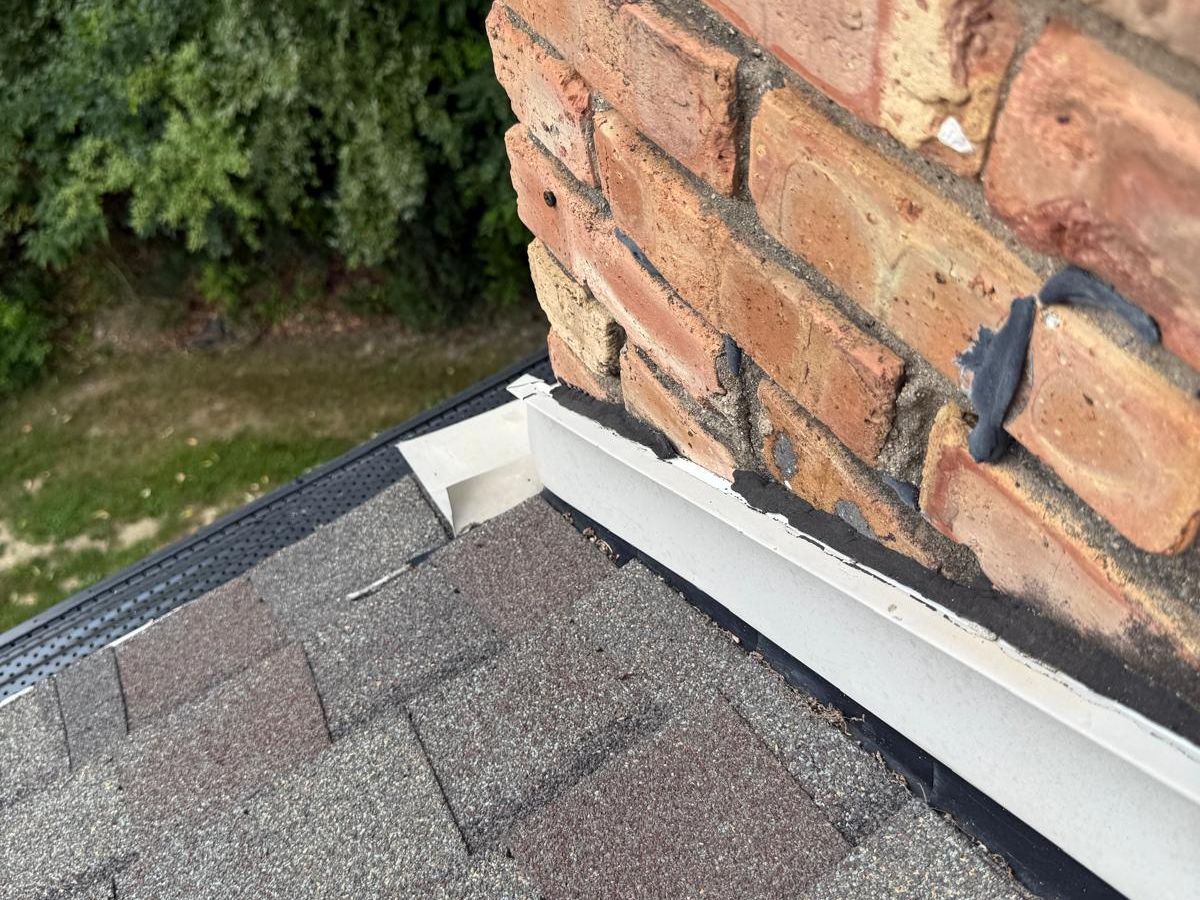
Flashing is the metal that seals the joint between the chimney and the roof. On a brick chimney it's usually two layers: step flashing woven in with the shingles, and counterflashing set into the brick and lapped over it. When either layer comes loose, rusts through or was never put in right, water runs in along the roof.
Tar or caulk smeared over that joint can stop a leak for a few years, but it doesn't last.
The crown
The crown is the concrete or mortar slab on top of a brick chimney. It sheds rain away from the flue and off the edges of the brick. Once it cracks, water goes down into the chimney.
A missing cap or a rusted chase cover
An open flue lets rain fall straight down the inside of the chimney. A cap over the flue keeps most of it out. On a framed chimney covered in siding, the metal chase cover on top does that job, and a rusted one lets water into the framing.
The brick and mortar
Brick and mortar take on water. When mortar joints crack or wash out, or the face of the brick starts to flake, more water gets in and stays in.
Condensation from a furnace or water heater
Some houses still vent a gas furnace or water heater through an old brick chimney. A more efficient appliance sends cooler exhaust up the flue, so its moisture can condense inside instead of leaving through the top. That moisture is acidic, and over time it eats at the mortar from the inside. It can look like a rain leak, with stains and damp brick, even in dry weather.
Who fixes which
If the trouble is the shingles around the chimney, a roofer is the right call. Flashing can go either way. Plenty of roofers do it well, and we do it too.
A cracked crown, a missing cap, a rusted chase cover, open mortar joints or condensation in the flue are chimney repairs. Patching the roof around them won't stop the water.
Before you call anyone
A few notes make the visit faster and the answer clearer.
- Write down when it leaks: in heavy rain, in wind-driven rain from one direction, during snowmelt, or in dry weather.
- Take photos of the stain, and of the chimney from the ground if you can see the top.
- Stay off the roof. We'll look at the top of the chimney.
- Don't let anyone seal the brick before the source is found. A clear sealer won't stop water coming in at the flashing, the crown or the flue.
A standard chimney inspection covers the outside of the chimney, including the brick and mortar, the crown, the cap and the flashing, along with the fireplace and the part of the flue we can see from inside. We'll tell you where the water is getting in and what it takes to stop it. If it turns out to be the roof, we'll tell you that too.
More guides
How often should a chimney be cleaned?
Why the standard is a yearly inspection, when a chimney actually needs sweeping, and what to check before your first fire.
White stains and crumbling brick on your chimney
What white stains and flaking brick on a chimney tell you, and why sealing the brick usually isn't the fix.
Level 1, 2 or 3 chimney inspection: which one you need
What each inspection level covers, when you need a Level 2, and what a regular home inspection leaves out.
Rusted chase cover or missing chimney cap
What rust streaks under a chimney mean, why chase covers rust, and when a cap or cover needs replacing.
Book an inspection or cleaning
Pick a day and a 3-hour arrival window online. If you'd rather talk it through, call (248) 266-9991.