What we work on
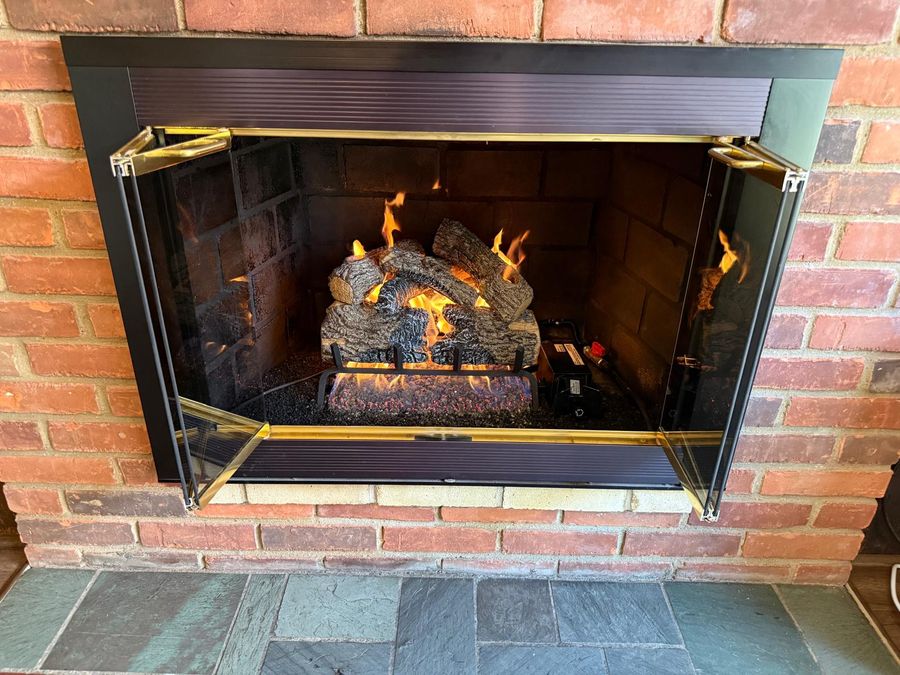
Open masonry fireplaces, factory-built wood fireplaces, fireplace inserts and freestanding wood stoves. Each one connects to the chimney differently, and that changes how we sweep it. We install gas inserts too.
Signs it's time to book
These are the things people usually call about:
- Smoke rolling into the room when the fire is going, or a smoky smell in the house on humid days when nothing is burning.
- A fire that's hard to get going or keeps dying down, even with dry wood.
- Black flakes falling into the firebox or onto the hearth.
- A stove door that doesn't latch snug, or a fire you can't turn down with the air control.
- Cracked or loose firebrick, or gaps opening up in the joints at the back of the firebox.
- A damper that sticks, won't close, or lets cold air pour in when the fireplace isn't in use.
The EPA's Burn Wise guidance suggests a simple check: go outside about 20 minutes after lighting a fire and look at the top of the chimney. If you see smoke, the wood may be too wet, the fire may need more air, or the stove and chimney may need maintenance.
How we sweep each one
On an open fireplace, we sweep from the firebox up through the smoke chamber to the top of the flue, and clear what's collected on the smoke shelf behind the damper.
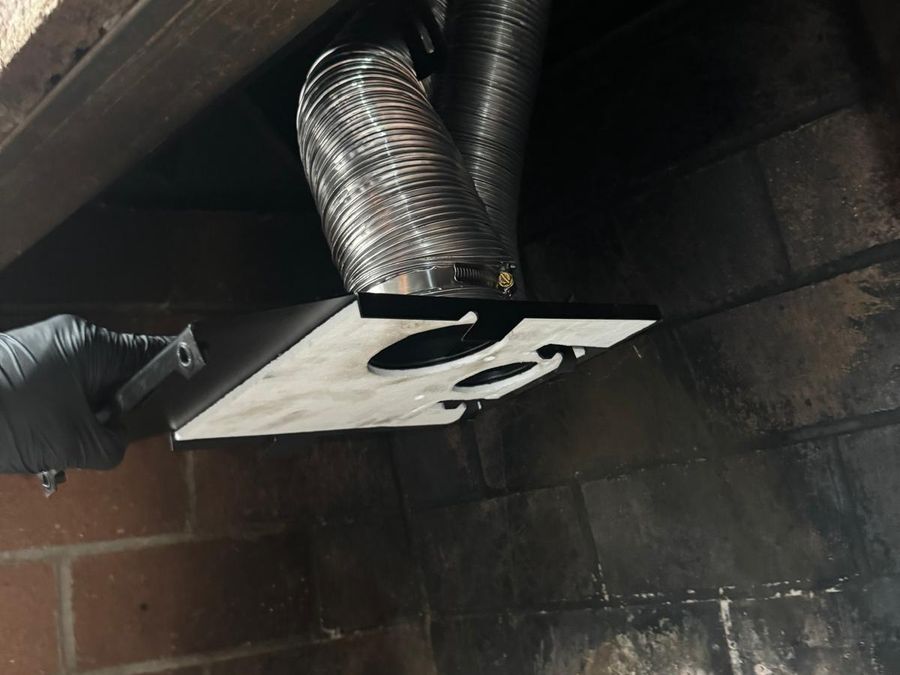
On a wood stove, the connector pipe between the stove and the chimney gets swept along with the flue. Many newer stoves have a baffle plate at the top of the firebox, and ash and creosote collect above it, so we clean there too.
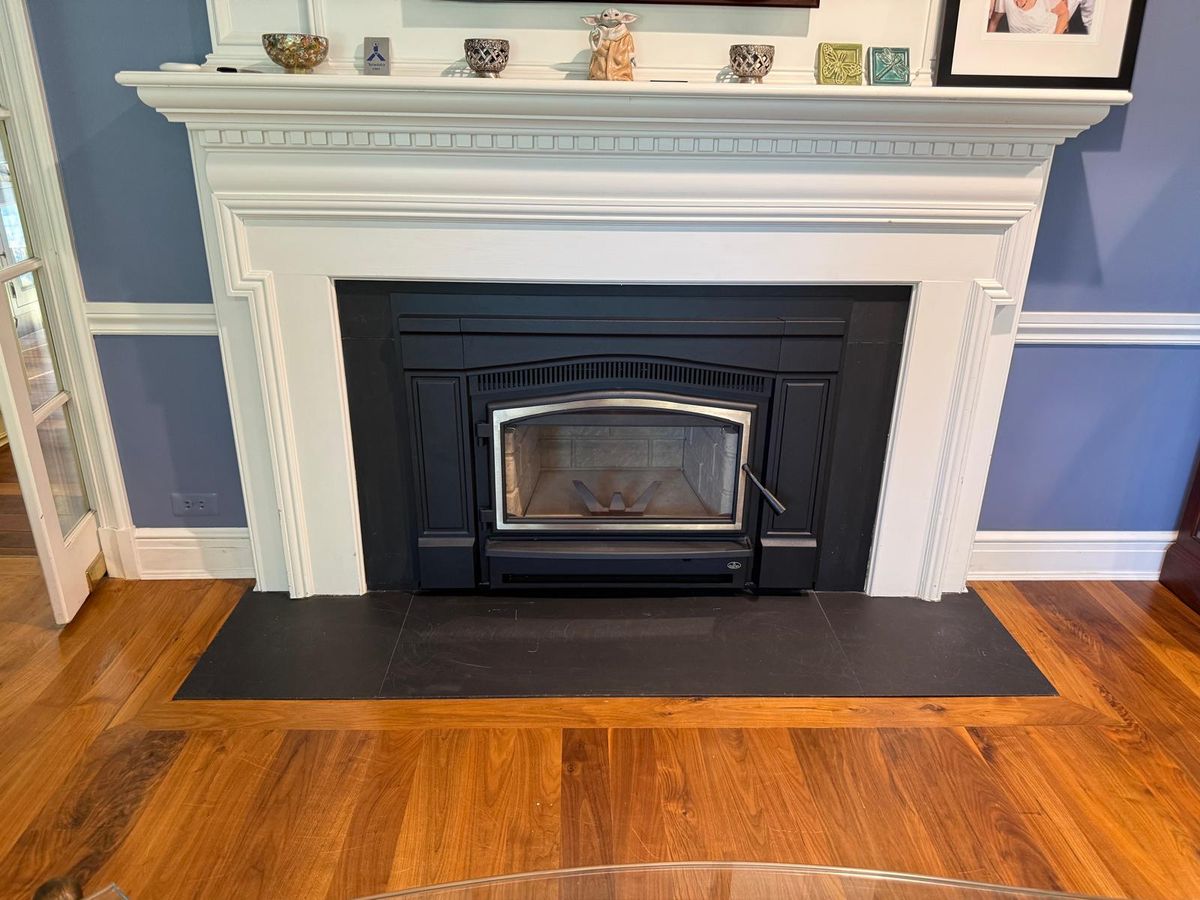
An insert sits inside the fireplace and usually vents through a liner attached to the top of it. Depending on the setup, we sweep the liner from the roof or pull the insert forward to get at the connection.
Drop cloths go down before we start, and we clean up before we leave.
Creosote, and what we look for
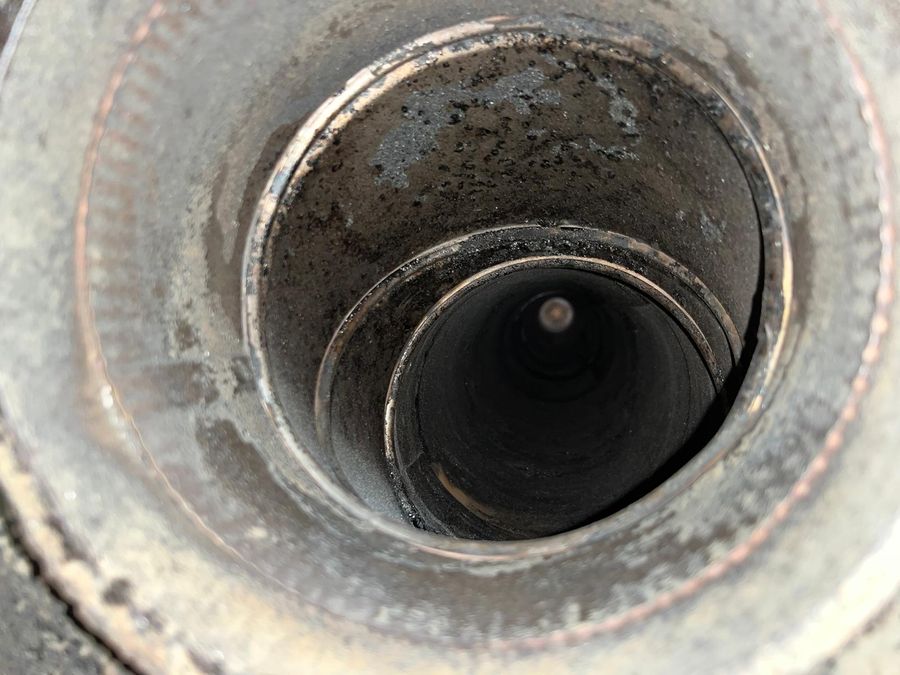
Creosote is what wood smoke leaves on the inside of the flue as it cools. Sweeps usually describe it in three stages. The first is a dry, powdery soot that brushes off easily. The second is flaky and crunchy, like black cornflakes. The third is a hard, shiny glaze that looks like tar, and a standard brush won't take it off.
Creosote burns, and the more of it there is in the flue, the more fuel there is for a chimney fire. We tell you which stage we found and what, if anything, it takes to remove it.
Inserts need their own liner
An old fireplace flue is usually much larger than the outlet on an insert. The insert's installation manual will call for a liner sized to its outlet, connected to the insert and run up to the top of the chimney.
When we look at an insert, we check whether that liner is there, whether it's still connected, and what shape it's in. More on that on our chimney liners page.
Stoves: door gaskets, glass and clearances
The door on a stove seals against a rope gasket. A worn gasket lets in extra air, and the fire burns faster and harder to control. An easy check at home is to close the door on a strip of paper. If it slides out without any drag, the gasket isn't sealing there. We check the gasket all the way around, plus the glass and its gasket.
Every listed stove has a label, usually on the back, and an installation manual that give the minimum distance to walls, furniture and the mantel, and the size of the hearth pad it has to sit on. We check the stove and its connector pipe against those numbers. Keep firewood, rugs and anything else that burns outside those clearances too.
Dampers, fireboxes and firebrick
Most older fireplaces have a throat damper, a metal plate just above the firebox that opens and closes with a handle. Others have a top-sealing damper at the top of the chimney, worked by a cable that comes down into the firebox. We check that yours opens all the way, closes, and seals.
The firebox is lined with firebrick set in heat-resistant mortar. We look for cracked or loose brick and open joints, since those are the places heat can get through to the masonry and framing behind.
Burning dry wood
The EPA's Burn Wise guidance says wood burns best at a moisture content below 20 percent, and that firewood should be seasoned for at least six months. It suggests testing wood with a moisture meter before you burn it. Wet wood hisses, smokes, and leaves more creosote in the flue.
The same guidance says not to burn trash, painted or pressure-treated wood, plywood, particle board or driftwood, and to put ashes in a covered metal container stored outdoors on a surface that won't burn.
When to book
NFPA 211, the chimney standard most inspectors work from, says chimneys, fireplaces and vents should be inspected at least once a year, with cleaning done when it's needed. If you burn most nights through the winter, expect that yearly visit to include a sweep.
Also call if you've bought a house with a stove or insert you know nothing about, or before you put in an insert. Book before the first cold week, when everyone else calls.