What tuckpointing is
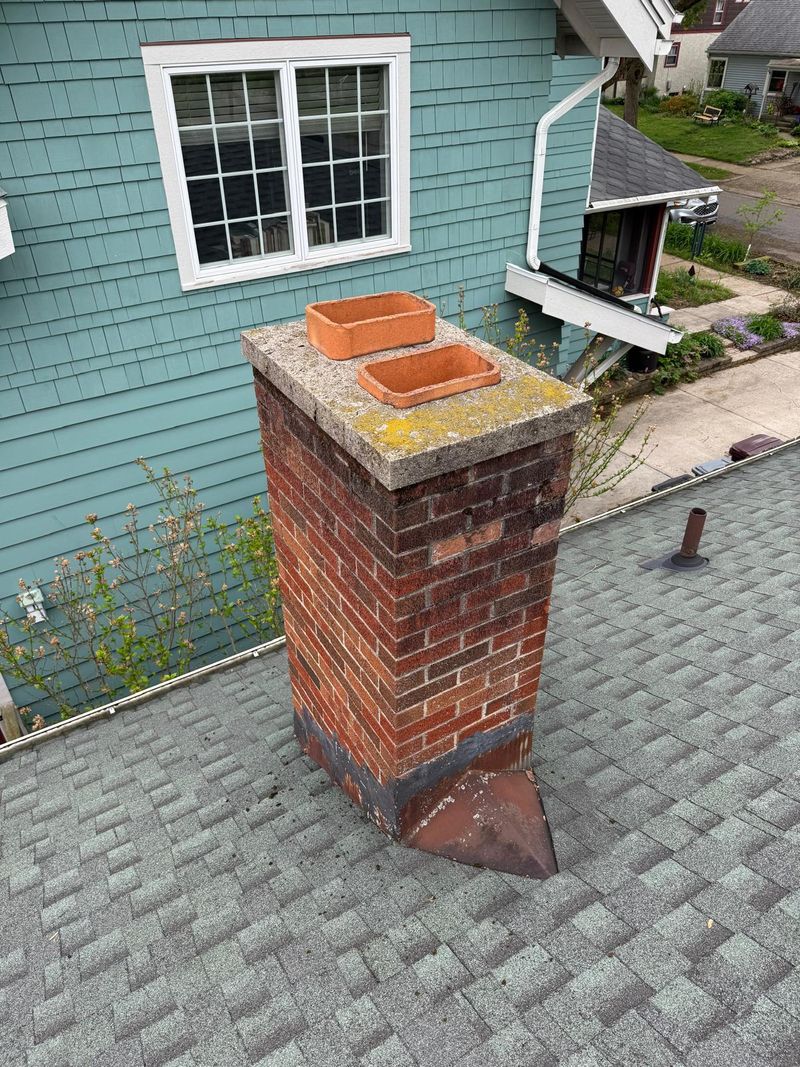
Tuckpointing is removing worn mortar from the joints between the bricks and replacing it with new mortar. On a chimney, the joints near the top usually go first because they take the most weather.
Brick repair and partial rebuilds
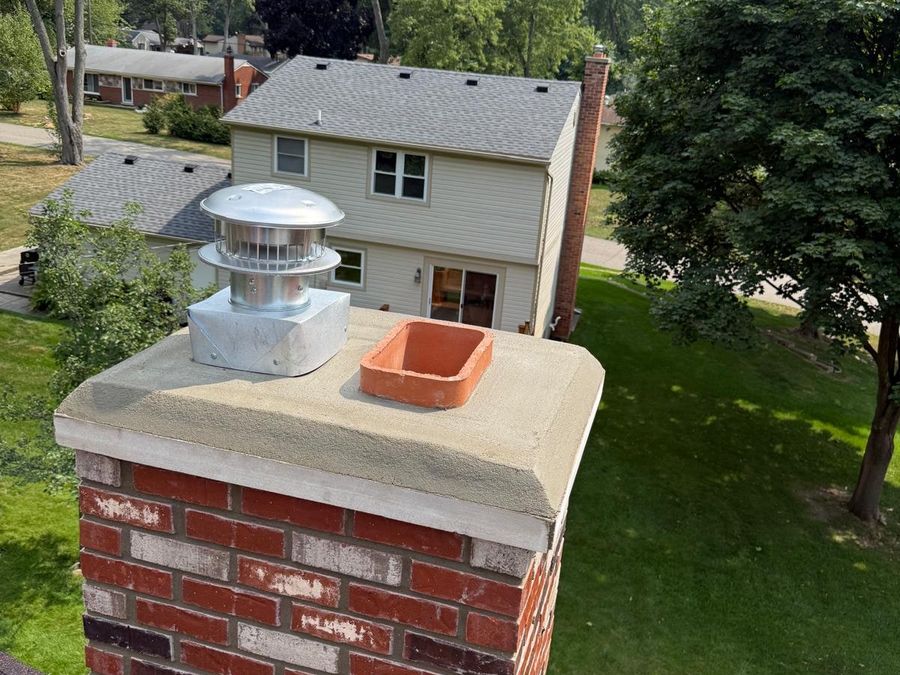
When bricks are cracked or crumbling, we replace them. When the top of a chimney has deteriorated too far to repair brick by brick, that section comes down and gets rebuilt.
Why chimney masonry wears out here
Water gets into brick and mortar, freezes, expands and breaks the surface apart. That happens over and over through a Michigan winter, and a chimney stands above the roof where it takes more weather than any other part of the house.
Matching the house
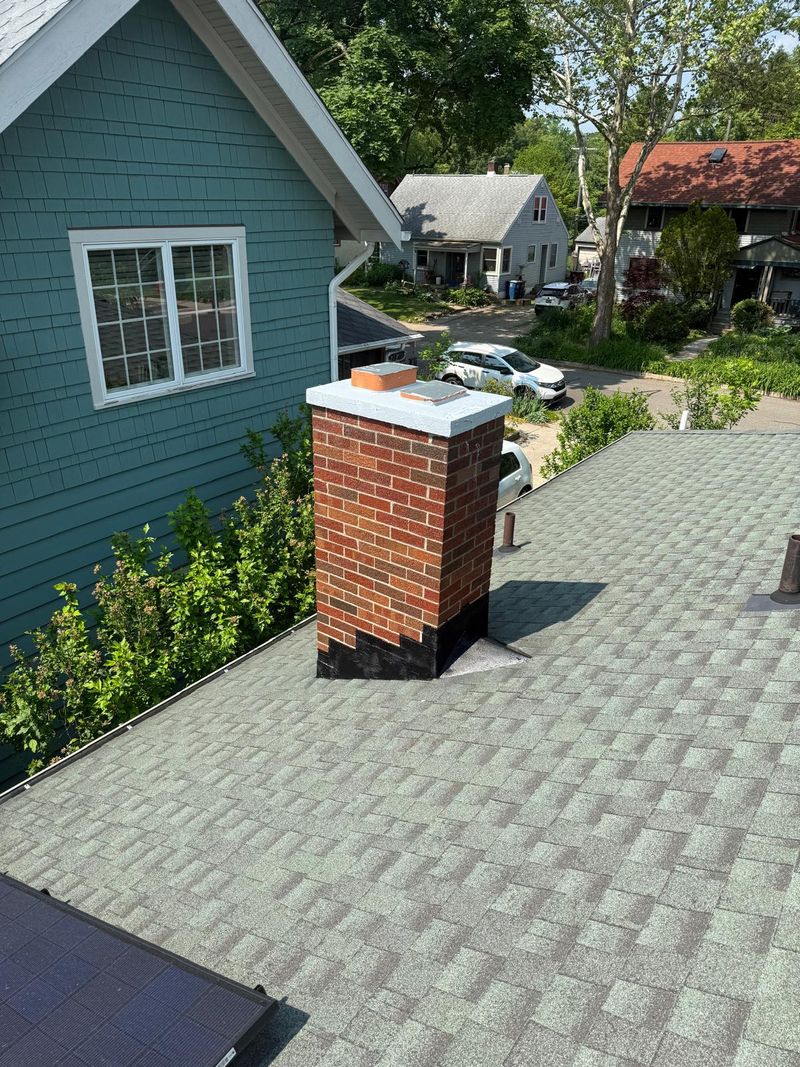
New mortar that doesn't match the old stands out from the street for years. We match the existing brick and mortar color as closely as we can, so the repair doesn't read as a patch.
Signs the joints need work
Mortar that has worn back from the face of the brick, mortar that turns to sand when you scrape it, cracks running along the joints, and white staining on the brick below the top of the chimney. Inside the house, a water stain near the chimney or a damp smell from the fireplace after rain can come from the same place.
How we tuckpoint a chimney
We cut the old mortar out with a grinder and clean the joints up by hand with a chisel, working carefully at the brick edges so they don't chip.
The National Park Service's Preservation Brief 2 on repointing says old mortar should come out to at least 2 to 2-1/2 times the width of the joint, which on most brick means about 1/2 to 1 inch deep. It gives the reason too: a shallower joint doesn't bond well and the new mortar can pop out. Any loose mortar past that depth comes out as well.
We blow the dust out of the joints and dampen the brick so it doesn't pull the water out of the new mortar too fast. The mortar goes in packed tight, in layers on deep joints, and each layer firms up before the next one goes on. Once the last layer is firm to the thumb, we tool the joints to the same profile as the rest of the house and brush off the excess.
Picking the mortar
Preservation Brief 2 says repointing mortar should be softer and more vapor permeable than the brick around it. If the wall moves, the joint cracks and the brick doesn't, and water inside the wall can dry out through the joints. A mortar that's harder than the brick can do the opposite, and older soft brick tends to spall at the edges around it.
Tuckpointing, partial rebuild or full rebuild
If the brick is sound and only the joints have failed, tuckpointing is the repair. Bricks that are cracked or have lost their face get cut out and replaced one at a time. When the top of the chimney leans, or a whole section of brick is loose, new mortar won't hold it, and that section comes down and gets relaid. A full rebuild from the roofline up is the last option, and we only quote one when the chimney can't be saved in sections.
What chimney tuckpointing costs
Tuckpointing a chimney runs $595 to $4,995. Where a job falls in that range depends on how much of the chimney needs new mortar and how high the work is.
Replacing 1 to 15 damaged bricks costs $850 plus $75 a brick, so five bricks is $1,225. Past 15 bricks, the work is priced as a rebuild: $50 a brick for the first 75, stepping down to $25 a brick past 500, with a crown, flashing and a cap added. A 100-brick rebuild is $4,875 before those, and hauling away the old brick is included.
Every masonry job starts with a look at the chimney. Book a $49 inspection, which is credited toward the repair, and you get a written quote, item by item, with the job total.
Weather and timing
Preservation Brief 2 puts the working range at wall temperatures between 40 and 95 degrees F, so the water in the mortar doesn't freeze or dry out too fast. Here that usually means April through October, and we reschedule if a day of steady spring rain is coming right after the work.
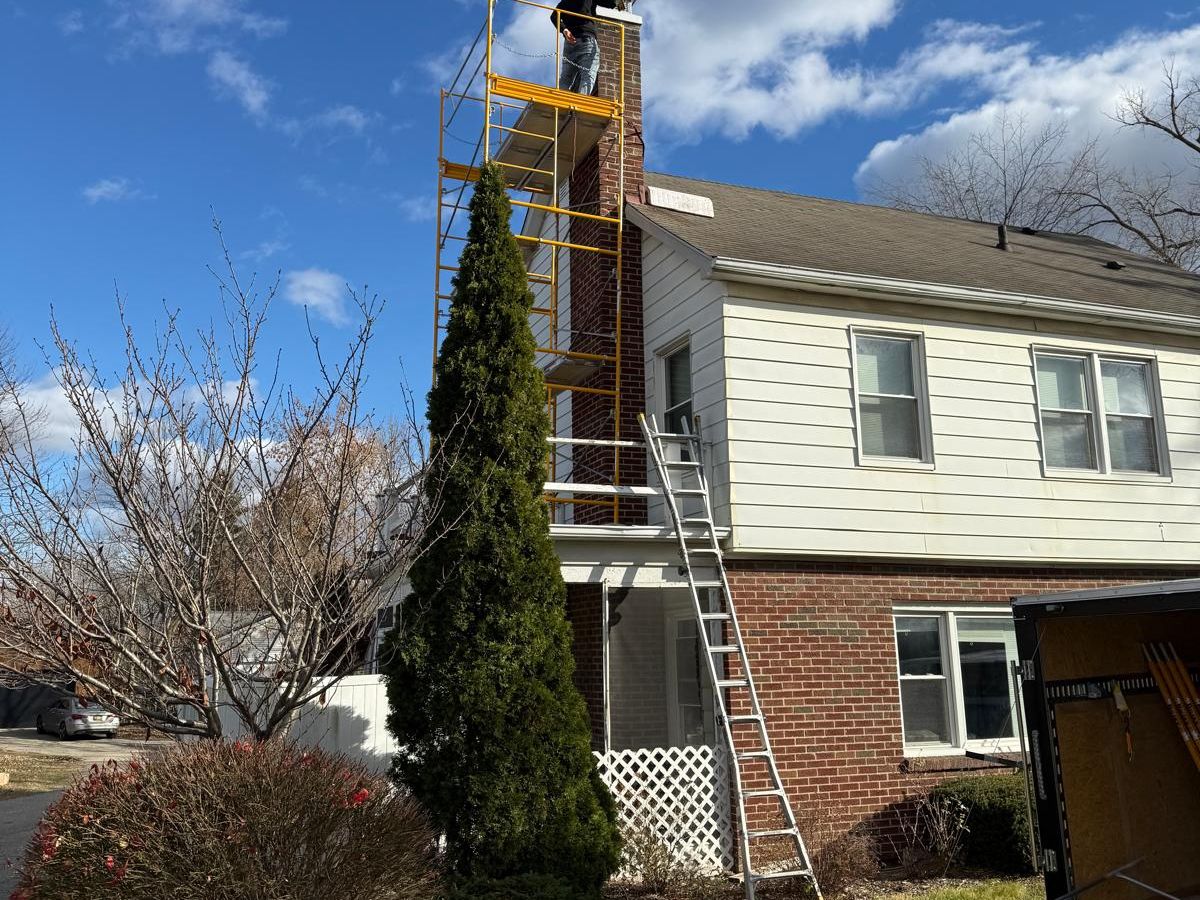
Tuckpointing the top of a typical chimney is usually one to two days. Taller chimneys, or ones that need scaffolding, take longer. Cutting out mortar is dusty work, so we tarp the roof and the plantings below, ask you to keep nearby windows shut, and clean up the dust and debris before we leave.
Where we do chimney masonry
We tuckpoint and repair chimneys across Oakland, Wayne, Washtenaw and Macomb counties, from Troy and Royal Oak to Livonia, Ann Arbor and Sterling Heights. The service area page lists every city we cover.