What a chimney liner is
A liner is the channel inside the chimney that carries smoke and exhaust gases up and out of the house. Older masonry chimneys usually have clay tile liners. Replacement liners are usually stainless steel, run down the existing flue.
The kinds of liner
Clay tile is what most older brick chimneys were built with. The tiles are square or rectangular sections stacked up the flue with mortar between them.
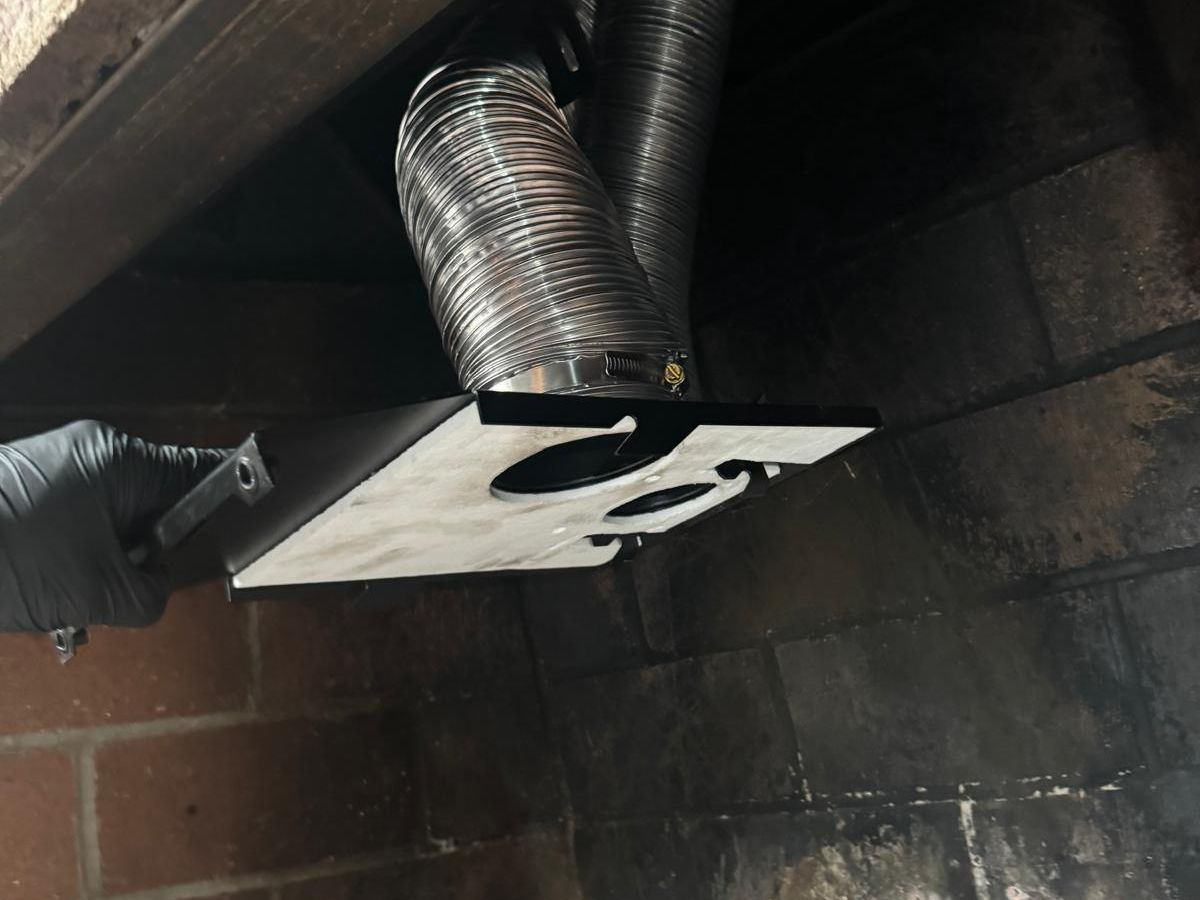
Stainless steel is the usual way to reline an existing chimney. It comes as flexible or rigid pipe, round or oval, and it's run down the old flue from the roof. It's the liner in the photo at the top of this page.
A cast-in-place liner is another option. An inflatable form goes down the flue, a masonry mix is poured around it, and the form comes out once the mix has cured, leaving a smooth new flue inside the old one. If one of these fits your chimney better than stainless, we'll say so when we go through the options.
Signs a liner is damaged or missing
Most liner problems can't be seen from the living room. They turn up on a camera run through the flue. What we look for:
- Cracked, broken or shifted tiles
- Gaps in the mortar joints between tiles
- Pieces of tile or flaking mortar at the bottom of the chimney or in the cleanout
- Stretches of flue with no liner at all, which is common in very old chimneys
- Damage left behind by a chimney fire
Two changes in the house also send people our way. One is a new furnace or water heater. The other is a wood or gas insert going into an old fireplace.
Why a new appliance usually needs its own liner
The Chimney Safety Institute of America says a masonry chimney without a liner will need one for a new appliance whatever the fuel, and that a homeowner switching from wood to gas may need a new, smaller liner because the old flue is too big.
Newer gas furnaces send cooler exhaust up the chimney than older ones did. In a big, cold clay flue that exhaust can condense, and the condensate is acidic enough to eat away the mortar joints from the inside. A smaller metal liner warms up faster, drafts better and keeps condensation down. If your furnace was replaced and the water heater was left in the chimney by itself, water heater venting alone into an old chimney goes through what that means.
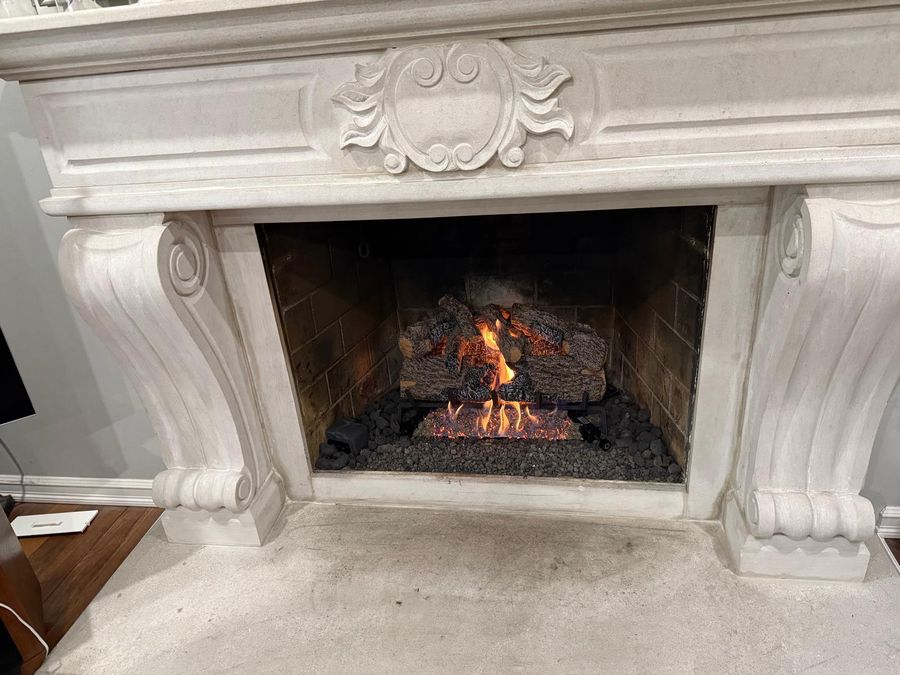
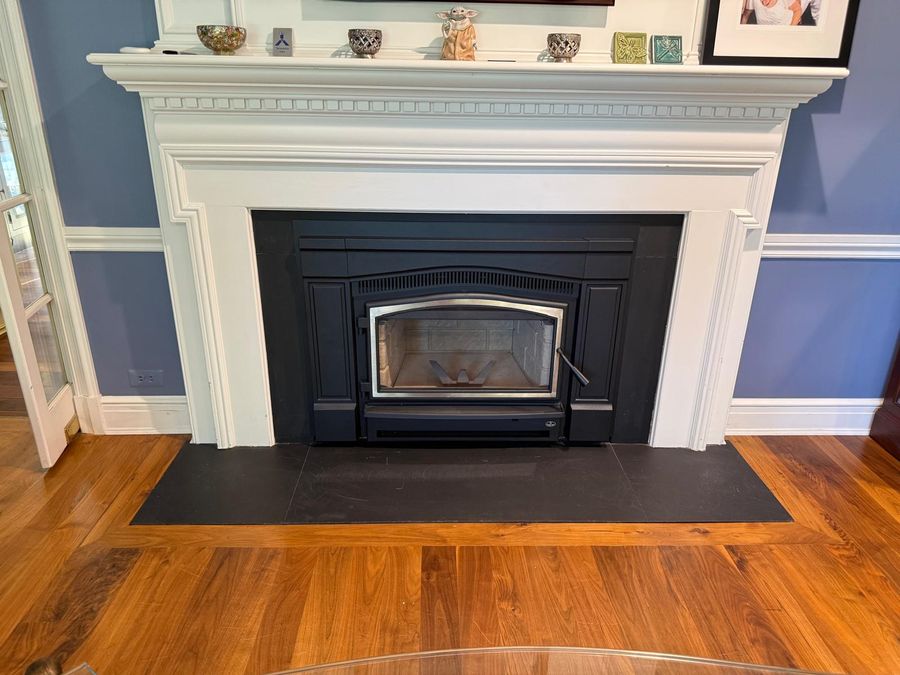
Wood inserts follow their installation manual. Insert manuals commonly call for a stainless liner running from the insert's flue collar to the top of the chimney, and say the insert must not share a flue with another appliance. We read the manual for your insert or appliance before we size the liner.
The Chimney Safety Institute of America also calls for a Level 2 inspection when a new heating appliance is added or the fuel changes. Level 1, 2 or 3 chimney inspection explains the difference, and our Level 2 chimney inspection page covers what we do on that visit.
How liner work goes with us
We don't decide on a liner from the ground. We inspect the system first and show you what we found, with a camera view of the flue if you want to see it. The liner type and size are listed in your quote.
A stainless relining job, on the day
We start with the camera, so we know the flue is the way we left it at the inspection. Then we measure the height of the flue and check the appliance's flue collar and the manual, which together set the size of the liner.
The liner goes down from the roof. Where the old tile or a tight spot gets in the way, we deal with that before the liner goes in. Insulation goes on the liner where the liner maker or the appliance manual calls for it.
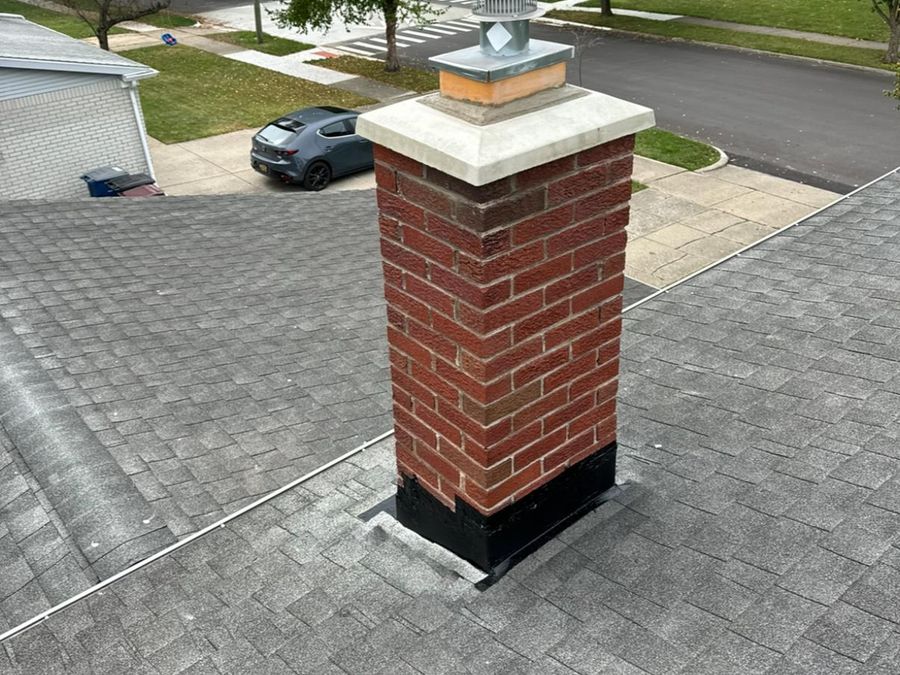
At the top, a top plate seals the old flue around the liner and a cap goes on the end of the liner to keep rain and animals out. At the bottom, the liner is connected to the appliance or to the insert's flue collar. Once everything is connected, we fire the appliance and check that it drafts before we leave.
How long it takes
A straightforward stainless reline on one flue is usually done in a day. Taking out an old liner, a very tall chimney, or broken tile that has to come out of the flue first can add time. We'll tell you what to expect when we quote the job.
Liners and Michigan winters
Water that gets into cracked tiles and open mortar joints freezes and thaws many times over a Michigan winter, and each freeze opens the gap a little more. Add condensation from a furnace or water heater running all winter into a flue that's too big for it, and a clay liner can wear out from both sides. A yearly chimney inspection catches most of it early.